Digital Equity Frontiers: The Evolution of Binance and Tokenized Stock Trading
Strategic Roadmap
[Hide Menu]Bridging the Gap: Crypto Meets Equity
The global financial landscape is currently navigating a period of profound structural change. Traditionally, the realms of equity markets and digital assets existed as separate silos, governed by different technologies and regulatory frameworks. However, the demand for 24/7 liquidity, fractional ownership, and borderless access has forced a convergence. This intersection is where the concept of tokenized stocks emerged, promising to democratize access to blue-chip companies like Tesla, Apple, and Coinbase.
Binance, as a dominant force in the cryptocurrency ecosystem, attempted to lead this charge. The objective was simple: allow a user in a jurisdiction with limited access to US markets to buy a digital token that tracks the price of a US-listed stock. This "synthetic" exposure represents a pivotal moment in financial engineering, moving the underlying value of a physical share into the lightning-fast environment of the blockchain.
The Rise and Fall of Binance Stock Tokens
In early 2021, Binance launched its Stock Tokens service. These were zero-commission digital tokens fully backed by a depository portfolio of underlying securities. They were held in custody by a third-party investment firm (CM-Equity AG in Germany). For the first time, crypto traders could purchase 0.01 of a Tesla share using BUSD (Binance USD).
However, this innovation was short-lived. By July 2021, Binance announced it would wind down its Stock Token offerings. The move came after intense pressure from regulators across the globe, who argued that these tokens constituted "securities" and required far more stringent oversight and licensing than a standard crypto exchange provided at the time.
Binance launches Tesla (TSLA) stock tokens. The launch is hailed as a breakthrough for fractional ownership, allowing users to buy exposure to high-priced stocks with as little as $10 BUSD.
Financial watchdogs in Germany (BaFin), the UK (FCA), and Hong Kong (SFC) issue warnings. They question whether Binance is essentially operating as an unlicensed stockbroker.
Binance officially halts the sale of new stock tokens. Existing holders are given 90 days to close their positions or have them liquidated. The experiment ends, highlighting the "Compliance Gap" in digital finance.
Mechanics of Tokenized Assets
To understand why Binance Stock Tokens were revolutionary, one must understand the collateralization process. These were not "paper trades" or "CFDs" (Contracts for Difference) in the traditional sense. Each token was intended to represent a share of real stock held in a custodial account.
The process involves a depository institution buying the actual shares on the NASDAQ or NYSE. Those shares are then "tokenized" on a blockchain (like the BNB Smart Chain or Ethereum). Each token acts as a digital certificate of ownership. This allows for several advantages:
- Fractionalization: Buying 1/100th of a share.
- 24/7 Trading: While the underlying stock only trades during market hours, the tokenized market could, in theory, stay active via liquidity providers.
- Instant Settlement: Blockchain settlement happens in minutes, compared to the T+2 (Trade date plus two days) settlement in traditional US markets.
The Custody Risk
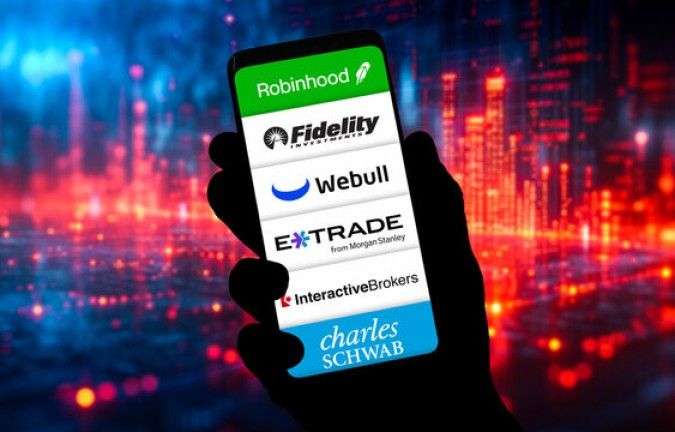
In a tokenized stock model, you do not hold the stock in your name at a brokerage like Fidelity or Schwab. You hold a token issued by a third party. If that third party or their custodian fails, your legal claim to the underlying stock may be tied up in complex international litigation.The Regulatory Wall and US Context
For US-based investors, "Binance stock trading" has always been out of reach. Binance.US, the separate entity designed for American compliance, never offered these tokens. The Securities and Exchange Commission (SEC) maintains a strict stance: if an instrument tracks the price of a security and offers the benefits of a security, it is a security.
The socio-economic impact of this regulation is a double-edged sword. On one hand, it protects investors from unregulated platforms that may lack proper insurance or audit trails. On the other hand, it creates a barrier for users who want to use their digital asset wealth to build diversified, multi-asset portfolios without moving back into the legacy banking system.
Security Architecture and Custody
When trading assets on a platform like Binance, the security of your account is the first priority. Because stock tokens involve a bridge between a blockchain and a traditional clearinghouse, the attack surface is larger than that of a pure crypto trade.
Security measures usually include Multi-Factor Authentication (MFA), whitelisting of withdrawal addresses, and cold storage for the digital keys. However, the most critical security feature in the Binance ecosystem is the Secure Asset Fund for Users (SAFU). This is an emergency insurance fund established to protect users in extreme cases, though it is primarily designed for crypto-based losses.
Brokerage vs. Exchange Comparison
As the "Binance experiment" showed, there is a distinct difference between a crypto exchange and a traditional brokerage. For an investor choosing a platform today, this comparison is vital for risk management.
| Feature | Crypto Exchange (e.g. Binance) | Traditional Broker (e.g. Fidelity) | Neo-Broker (e.g. Robinhood) |
|---|---|---|---|
| Asset Variety | High (Crypto, NFTs, RWAs) | High (Stocks, Bonds, ETFs) | Medium (Stocks, Major Crypto) |
| Regulation | Varies by jurisdiction | Strict (SEC, FINRA) | Strict (SEC, FINRA) |
| Insurance | SAFU (Internal) | SIPC ($500k per account) | SIPC ($500k per account) |
| Settlement Speed | Instant (Blockchain) | T+1 / T+2 | T+1 / T+2 |
| Trading Hours | 24/7/365 | 9:30 AM - 4:00 PM EST | Extended Hours (7 AM - 8 PM) |
The Future of Real World Assets (RWA)
While Binance withdrew its specific stock tokens, the movement toward Real World Asset (RWA) tokenization is accelerating. Major institutions like BlackRock and Franklin Templeton are now issuing tokenized funds. This suggests that the problem wasn't the technology, but the regulatory delivery mechanism.
In the coming years, we expect to see "Regulated DeFi" where users can trade stocks on-chain, but only through platforms that have cleared the KYC (Know Your Customer) and AML (Anti-Money Laundering) requirements of major economies. This will provide the 24/7 efficiency of the Binance model with the legal safety of the traditional world.
Strategic Execution for Modern Portfolios
For the modern investor, navigating the intersection of Binance and equity requires a bifurcated approach. It is unwise to wait for a crypto exchange to solve the regulatory puzzle of stock trading. Instead, investors should utilize each tool for its primary strength.
Cost of Synthetic vs. Traditional Entry
Recommended Implementation
- Use Crypto Exchanges for Liquidity: Keep your high-velocity capital in stablecoins or major tokens for quick maneuvers.
- Use SIPC-Insured Brokers for Equity: For long-term holdings in companies like Tesla or Apple, use a regulated US broker. The legal protections (SIPC insurance) far outweigh the convenience of having everything in one app.
- Watch the RWA Sector: Monitor projects like MakerDAO or Ondo Finance that are bringing Treasury bills and other low-risk equities to the blockchain in a compliant manner.
The story of Binance stock trading is a masterclass in the friction between disruptive technology and regulatory stability. While the specific tokens are gone, the demand they uncovered is permanent. The future of finance is not one or the other; it is a hybrid system where the blockchain acts as the ledger and the law acts as the shield.