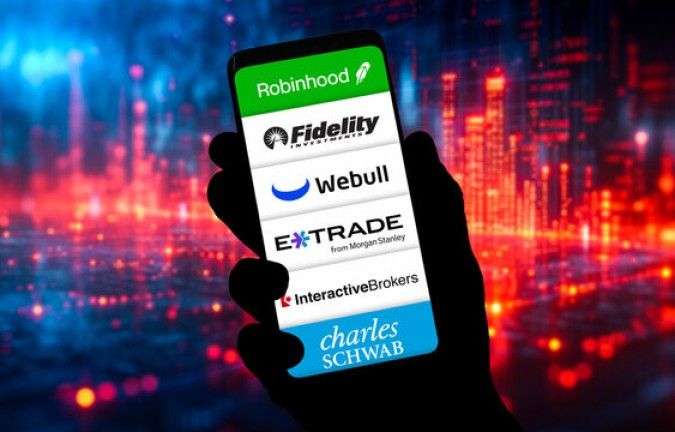
Strategic Selection: Identifying the Best Mobile App for Stock Trading
The Investor's Roadmap
- The Modern Trading Landscape
- Fidelity: The Comprehensive Institutional Tool
- Charles Schwab: Best for Research Depth
- Robinhood: Leading UX for New Entrants
- Tastytrade: Professional Options Infrastructure
- The Mathematics of Trading Costs
- Security Protocols and Capital Protection
- Portfolio Integration and Tax Optimization
- Strategic Selection Conclusion
The democratization of financial markets has effectively moved the trading floor into the palm of the individual investor. Choosing the best mobile app for stock trading is no longer just about aesthetics; it is a critical decision regarding capital efficiency, research access, and execution speed. For a seasoned investor, the "best" app is defined by how well the interface facilitates the execution of a specific investment thesis.
As a finance expert, I view these platforms as specialized tools in a diverse toolkit. A long-term value investor requires a different set of features than a high-frequency options trader. This guide provides a rigorous analysis of the leading platforms, stripping away the marketing buzz to reveal the functional reality of mobile brokerage services. We will examine how these apps manage order flow, provide institutional-grade data, and protect your most valuable asset: your capital.
The Modern Trading Landscape
The transition to commission-free trading changed the revenue models of major brokerages. Today, "free" trading is often subsidized by Payment for Order Flow (PFOF), a practice where brokers route your orders to market makers for a small fee. While this eliminates upfront commissions, it can sometimes result in slightly inferior execution prices. Understanding this trade-off is the first step in becoming a sophisticated mobile trader.
Fidelity: The Comprehensive Institutional Tool
Fidelity Investments has managed to bridge the gap between traditional institutional stability and modern mobile agility. Their app is designed for the holistic investor who manages not just a brokerage account, but also retirement accounts (IRA/401k) and cash management accounts.
Fidelity stands out for its execution quality. Unlike several competitors, Fidelity does not accept PFOF for equity trades, which often leads to better price improvement for the user. Additionally, the ability to trade fractional shares in real-time allows for precise dollar-cost averaging into expensive stocks.
The interface, which was historically criticized for being cluttered, has undergone a significant redesign. It now offers a "Classic" and "Spire" view, catering to both traditionalists and younger investors. For someone managing a multi-asset portfolio, Fidelity provides the most robust consolidated view of wealth available in a mobile format.
Charles Schwab: Best for Research Depth
Following the acquisition of TD Ameritrade, Charles Schwab has inherited the legendary thinkorswim platform. This makes Schwab a dual-threat: a user-friendly standard app for the average investor and a high-octane technical powerhouse for the active trader.
Robinhood: Leading UX for New Entrants
Robinhood remains the benchmark for User Experience (UX). They stripped away the complexity of traditional brokerages, creating an interface that makes buying a stock as simple as ordering a pizza. However, this simplicity can be a double-edged sword for the undisciplined trader.
The Robinhood Gold Advantage
For a small monthly fee, Robinhood Gold offers 5% APY on uninvested cash (rates subject to change), Level II market data (Nasdaq TotalView), and professional research from Morningstar. For many, the interest on cash alone covers the subscription cost.
While Robinhood relies heavily on PFOF, their execution speed remains highly competitive for the retail trader. Their addition of 24/5 trading allows investors to react to global news cycles in real-time, a feature that many legacy brokers have been slow to implement.
Tastytrade: Professional Options Infrastructure
For the investor focused on derivatives and income generation, Tastytrade (formerly Tastyworks) is the definitive choice. The mobile app is built by the same team that created thinkorswim, but it is optimized specifically for probability-based trading and volatility analysis.
The "curve" and "table" views on the mobile app allow for complex multi-leg options strategies (like Iron Condors or Strangles) to be placed with a few taps. It provides real-time "Probability of Profit" (POP) metrics, which is a game-changer for risk management on the go.
The Mathematics of Trading Costs
Even in a "zero-commission" world, costs persist. Understanding the expense ratio of ETFs and the spread on low-volume stocks is vital for capital preservation. Let us examine the impact of a 0.50% "hidden cost" (spread + slippage) over a series of trades.
--------------------------------
Investment Amount: 10,000.00 dollars
Annual Turnover: 100% (10 trades of 1,000 dollars)
Hidden Execution Cost: 0.50%
Annual Cost: (10,000 * 0.005) = 50.00 dollars
Over 20 Years (at 8% growth):
Lost Principal: 1,000.00 dollars
Lost Compounding Opportunity: ~2,300.00 dollars
Total Long-term Drag: 3,300.00 dollars
This calculation illustrates why price improvement (getting a purchase at 150.01 instead of 150.02) matters. Fidelity and Schwab typically lead in this metric, making them "cheaper" in the long run than apps that might have a flashier interface but poorer routing logic.
Security Protocols and Capital Protection
A mobile app is a portal to your net worth; therefore, security is the paramount feature. When selecting an app, you must verify that the broker is a member of the SIPC (Securities Investor Protection Corporation). This protects your assets up to 500,000 dollars (including 250,000 dollars for cash) if the brokerage fails.
| Security Feature | Standard Implementation | Expert Recommendation |
|---|---|---|
| Authentication | SMS 2FA | Use App-based TOTP (Google Authenticator) or Hardware Keys. |
| Encryption | AES-256 bit | Ensure the app has a "Privacy Mode" to hide balances in public. |
| Excess SIPC | Varies by Broker | Fidelity and Schwab carry significant private insurance coverage. |
| Biometrics | FaceID / TouchID | Always enable to prevent unauthorized access if the phone is stolen. |
Portfolio Integration and Tax Optimization
The best apps don't just facilitate buying and selling; they assist with Tax-Loss Harvesting. This is the practice of selling a security at a loss to offset capital gains elsewhere in your portfolio. Apps like Wealthfront (for automated investing) or the "tax-lot" selection tools in the Schwab and Fidelity apps make this effortless.
When you sell a stock on a mobile app, the default is often "First In, First Out" (FIFO). However, choosing "Highest Cost" or "SpecID" allows you to specifically target the shares that minimize your tax liability. A high-quality mobile app provides these choices at the point of the "Sell" screen, not buried in a settings menu.
Strategic Selection Conclusion
Selecting the best mobile app for stock trading requires an honest assessment of your investor persona. If you are a long-term compounder who values institutional research and execution quality, Fidelity or Schwab are the objective winners. If you are a new investor looking for the lowest barrier to entry and a world-class interface, Robinhood remains unmatched. For the derivatives specialist, Tastytrade provides the necessary technical infrastructure.
Remember that your brokerage relationship is not a marriage. It is a commercial partnership. You should regularly review whether your app's features align with your growing financial complexity. In the high-stakes environment of global markets, the app you use should act as a transparent window into your capital, not a barrier to it. Discipline, combined with the right technical tool, is the most reliable path to institutional-grade wealth creation.