Virtual Gold or Digital Dust? Assessing Metaverse Coins as an Investment
- Defining the Metaverse Asset Class
- Tokenomics: The Engine of Virtual Value
- Digital Real Estate and Land Ownership
- Play-to-Earn: Sustainable Economy or Fad?
- Analyzing the Big Three: MANA, SAND, and AXS
- Corporate Adoption: The Meta and Nike Effect
- Risk Factors: Volatility and Platform Lock-in
- Strategic Allocation and Entry Points
- ROI Modeling: Digital Rent vs. Appreciation
- The VR/AR Integration and Future Utility
- Strategic FAQ for New Investors
The concept of the metaverse has transitioned from a niche science fiction trope into a multi-billion dollar financial frontier. At the heart of this transition lie metaverse coins, the native digital currencies that power virtual economies, facilitate governance, and enable the exchange of unique digital assets known as NFTs. While the parabolic rallies of previous market cycles created overnight millionaires, the fundamental question remains: are these tokens a sustainable addition to a professional investment portfolio, or are they speculative bubbles waiting to burst?
To understand the investment potential of metaverse coins, one must look beyond the 3D graphics and virtual avatars. These assets represent equity in a digital landscape. Investing in Decentraland (MANA) or The Sandbox (SAND) is not merely about playing a game; it is an bet on the long-term migration of human interaction, commerce, and entertainment into decentralized virtual spaces. This article dissects the mechanics of these virtual economies to determine where the real value lies.
Defining the Metaverse Asset Class
Metaverse coins function as the "gas" and the "medium of exchange" for their respective virtual worlds. Unlike Bitcoin, which serves primarily as a store of value, or Ethereum, which serves as a smart contract platform, metaverse tokens are utility-driven. They are used to purchase virtual land, customize avatars, access exclusive events, and participate in decentralized autonomous organizations (DAOs) that decide the future of the platform.
We can categorize these assets into three primary layers. First, the platform tokens (like MANA and SAND), which underpin entire ecosystems. Second, in-game assets (like AXS for Axie Infinity), which are tied to specific gaming mechanics. Third, infrastructure tokens (like Enjin), which provide the tools for other developers to build their own virtual experiences. Each layer carries a different risk profile and potential for growth.
Tokenomics: The Engine of Virtual Value
The viability of any metaverse coin depends on its tokenomics—the economic model governing its issuance and utility. An investor must ask: is the token supply capped, or is it inflationary? Does the platform "burn" tokens to increase scarcity? For instance, Decentraland utilizes a burn mechanism where a portion of the MANA spent on land auctions or marketplace transactions is permanently removed from circulation.
This deflationary pressure can be a significant tailwind for price appreciation during periods of high platform usage. Conversely, if a platform relies on high inflation to reward early adopters (common in Play-to-Earn games), the token value may suffer significant dilution over time unless the user base continues to grow at an exponential rate. Understanding this balance is the difference between a long-term hold and a short-term trade.
Digital Real Estate and Land Ownership
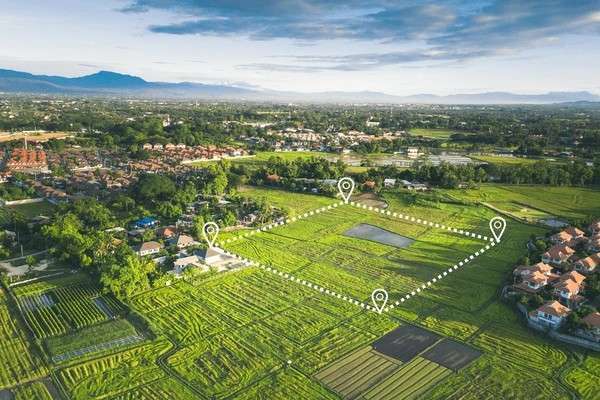
The most controversial and lucrative aspect of the metaverse is digital real estate. In platforms like The Sandbox, "LAND" is a finite NFT asset. To build an experience, a shop, or a social hub, an entity must own or rent this LAND. This creates a 1:1 relationship between the platform's popularity and the value of its underlying real estate.
Major brands like Adidas, Gucci, and Warner Music Group have spent millions of dollars acquiring virtual land. Their goal is to create "branded experiences" that engage a younger, digitally native audience. For an investor, buying the platform token is often a proxy for investing in this digital real estate market without the complexity of managing individual NFT parcels.
Play-to-Earn: Sustainable Economy or Fad?
The "Play-to-Earn" (P2E) movement, spearheaded by Axie Infinity, introduced the idea that users could earn a living wage by participating in virtual economies. This created massive adoption in emerging markets but also highlighted a significant flaw: the ponzi-nomics risk. If a game's only source of value is new players buying tokens to start playing, the economy collapses when player growth slows.
The second generation of metaverse coins is moving toward Play-and-Earn. The focus has shifted to high-quality gameplay and social utility, where the token is a byproduct of the experience rather than the sole reason for participation. This transition is crucial for the long-term stability of the asset class. Investors should prioritize platforms where users are willing to spend money for entertainment, not just to earn a yield.
Decentraland (MANA)
One of the oldest decentralized platforms. Fully DAO-controlled. Focuses on social experiences, art galleries, and virtual corporate headquarters.
The Sandbox (SAND)
A voxel-based world focused on gaming and user-generated content. Stronger brand partnerships and a more mature creator economy.
Enjin (ENJ)
An infrastructure play. Provides the tools for developers to integrate NFTs and metaverse features into existing games across multiple platforms.
Analyzing the Big Three: MANA, SAND, and AXS
Decentraland (MANA) remains the industry standard for decentralization. Because no single company controls the servers, it appeals to the core crypto ethos. However, its graphics are often criticized as dated, and concurrent user numbers have fluctuated. An investment in MANA is a bet on the open metaverse—a world not owned by Meta (Facebook) or Microsoft.
The Sandbox (SAND) has taken a more commercial approach. By partnering with global icons like Steve Aoki and The Walking Dead, they have created "cultural hubs" that draw in fans. Their "Game Maker" tool allows users without coding knowledge to build complex 3D games, creating a "Roblox-on-the-Blockchain" dynamic that is highly attractive to speculators and creators alike.
Axie Infinity (AXS) represents the potential of niche, high-engagement communities. While it suffered during the P2E downturn, its pivot to "Origins" and its dedicated player base suggest it still has staying power. However, AXS is more sensitive to gaming trends than the broader "real estate" platforms like SAND or MANA.
Corporate Adoption: The Meta and Nike Effect
When Facebook rebranded to Meta, it provided the ultimate validation for the sector. While Meta is building a centralized, "walled-garden" metaverse, its entry forced every major global brand to formulate a metaverse strategy. Nike's acquisition of RTFKT and the launch of "Nikeland" in Roblox demonstrate that the metaverse is seen as the next major channel for Direct-to-Consumer (DTC) sales.
For investors in decentralized metaverse coins, this corporate interest is a double-edged sword. On one hand, it drives mainstream awareness and capital into the space. On the other hand, centralized giants could eventually offer a more polished, user-friendly experience that overshadows decentralized alternatives. The "moat" for decentralized coins lies in interoperability—the ability to take your digital assets from one world to another, something Meta is unlikely to permit.
Risk Factors: Volatility and Platform Lock-in
Beyond price volatility, technological risk is paramount. Building a persistent, 3D, multi-user world is an immense engineering challenge. If a platform fails to scale its technical infrastructure to handle millions of users, the value of its land and tokens will evaporate. Additionally, "Ghost Town" risk is real; many platforms have thousands of plots of expensive virtual land but very few active users to populate them.
Strategic Allocation and Entry Points
Due to the high-risk nature of the sector, metaverse coins should typically represent a small percentage of a broader crypto portfolio—generally between 5% and 10%. A common strategy is to utilize Dollar Cost Averaging (DCA) to build a position during the "boring" periods of the market cycle when the hype has died down.
Successful swing traders look at Social Sentiment and Active Wallet data. If a platform is announcing new land sales or major celebrity partnerships, it often leads to a short-term spike in token demand. However, long-term investors should focus on the developer activity (GitHub commits) and the diversity of the DAO participants to ensure the project has a future beyond the current marketing cycle.
ROI Modeling: Digital Rent vs. Appreciation
Investors can generate returns in two ways: capital appreciation of the token or yield from the underlying digital assets. Let us look at a hypothetical scenario involving digital land rental, which is paid in the platform's native coin.
Cost of 1 Plot of LAND: 5,000 SAND
Monthly Rent Charged: 150 SAND
Annual Rental Income: 150 x 12 = 1,800 SAND
Initial Annual Yield: 1,800 / 5,000 = 36%
If the SAND token price also appreciates by 20% during the year, the total "real-world" ROI is significantly higher. However, if the token price drops by 50%, the user still has more SAND but has lost USD value. This is the Dual Volatility risk of metaverse investing.
The VR/AR Integration and Future Utility
The "endgame" for the metaverse is the integration of Virtual Reality (VR) and Augmented Reality (AR). When users can put on a headset and step into Decentraland with the same fidelity as a modern AAA video game, the utility of metaverse coins will shift from speculative to essential.
We are also seeing the rise of Digital Identity. Your metaverse avatar and the items you own (represented by tokens and NFTs) will become your "digital passport." In a future where we spend 6-8 hours a day in virtual environments for work and socializing, the coins that power these identities will become foundational pieces of global digital infrastructure.
| Metric | Decentraland (MANA) | The Sandbox (SAND) | ApeCoin (APE) |
|---|---|---|---|
| Primary Use Case | Open Social World | Gaming & Branded LAND | Otherside Metaverse Ecosystem |
| Governance Structure | Full Decentralized DAO | Corporate-led with DAO | Community-led DAO |
| Max Supply | Fixed (Deflationary) | Fixed Cap (3 Billion) | Fixed Cap (1 Billion) |
| Market Liquidity | High (All major exchanges) | High (All major exchanges) | High (High retail interest) |
| Target Audience | Artists, Corporations | Gamers, Creators | Bored Ape Community, Fashion |
Strategic FAQ for New Investors
For most investors, buying the coin is the smarter move. Land (NFTs) is illiquid; it can take weeks or months to find a buyer. Coins can be sold instantly on exchanges. Buying the coin gives you exposure to the entire platform's growth without the administrative burden of managing virtual property.
If a platform like The Sandbox shuts down its servers, the SAND token and the LAND NFTs will likely lose 99% of their value. While the NFT still exists on the blockchain, it has no utility if there is no 3D world to visualize it in. This is the primary risk of "platform dependency."
Yes, many platforms offer staking where you can "lock" your coins to earn a portion of the platform's transaction fees or new token emissions. This is an excellent way to earn passive income while waiting for price appreciation, though it carries the risk of not being able to sell during a sudden market crash.
Metaverse coins represent one of the most exciting, yet treacherous, segments of the modern financial market. They offer a front-row seat to the digitization of everything, from land to social status. However, success in this space requires more than just following the latest trend. It requires a disciplined approach to tokenomics, an understanding of technical infrastructure, and a cold, analytical view of corporate adoption.
As the technology matures and the graphics improve, the distinction between "virtual" and "real" wealth will continue to blur. For the patient investor who can navigate the volatility and identify the platforms with genuine utility, metaverse coins may well become the "digital real estate" of the 21st century. But always remember: in the digital frontier, today's gold can easily become tomorrow's dust if the users decide to move elsewhere.