The Professional Arsenal: A Definitive Guide to the Best Stock Trading Tools
Financial markets operate with a speed and complexity that renders manual analysis obsolete. For the retail trader, the gap between success and failure often lies in the quality of their infrastructure. Stock trading tools do not exist merely to display price action; they serve as cognitive extensions, filtering billions of data points into actionable signals. Whether you are a high-frequency scalper or a value-oriented swing trader, your tech stack determines your competitive edge in a zero-sum environment.
The transition from "hobbyist" to "professional" is marked by the deliberate selection of software that minimizes friction and maximizes clarity. Relying solely on a basic brokerage app is akin to racing a consumer vehicle on a Formula 1 track. This guide explores the elite software solutions that provide institutional-grade insights to retail participants, ensuring that your decision-making process is backed by the most robust data available.
The Modern Trading Ecosystem
A successful trading setup is rarely a single software application. Instead, it is a curated ecosystem where different tools handle specific tasks: ideation, validation, execution, and review. Ideation requires scanners to find movement; validation requires charting to identify entry points; execution requires a low-latency broker; and review requires a journal to track performance. If any link in this chain is weak, the entire operation suffers.
In the United States, the retail trading landscape has seen an explosion of specialized tools that were previously reserved for hedge fund analysts. We now see a convergence of artificial intelligence, real-time sentiment analysis from social media, and complex quantitative modeling available at a monthly subscription price. The challenge is no longer accessing data, but managing the signal-to-noise ratio.
Charting and Technical Analysis
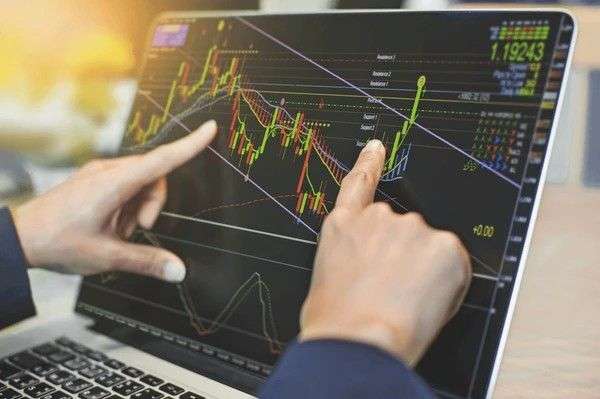
Charting platforms are the visual heart of technical analysis. They allow traders to apply mathematical overlays to price action, identifying support, resistance, and momentum shifts. A superior charting tool must offer high-resolution data, customizable coding environments, and seamless multi-device synchronization.
TradingView
The industry standard for retail charting. Its "PineScript" language allows for custom indicator creation, and its social integration provides a constant stream of peer-reviewed trade ideas.
TC2000
Renowned for its speed and proprietary "EasyScan" technology. It is a favorite among momentum swing traders who need to flip through hundreds of charts in minutes without lag.
When selecting a charting tool, prioritize data integrity. Some free platforms use "BATS" data, which only represents a small fraction of the total market volume. Professionals pay for "CBOE" or "NYSE/NASDAQ" direct feeds to ensure the volume bars they see reflect the true institutional participation.
Fundamental Research Engines
For those who base decisions on the health of a company rather than just the movement of its stock, fundamental research tools are indispensable. These engines aggregate SEC filings, earnings call transcripts, and analyst revisions into a readable format. Without these, you are forced to manually comb through hundreds of pages of 10-K reports.
Real-Time Scanning and Screening
The stock market is a vast ocean, and scanners are your radar. A scanner looks for specific behaviors—such as a 2% price spike on 3x normal volume—and alerts you the moment it happens. For day traders, a real-time scanner is not optional; it is the primary way they find their "stocks in play" for the morning session.
Trade Ideas is currently the market leader for AI-assisted scanning. Its "Holly" AI runs millions of simulated trades every night to determine which setups have the highest probability of success for the following day. For those on a budget, StockRover offers excellent screening for long-term investors, while Benzinga Pro provides a mix of news and scanners tailored for the active participant.
News Sentiment and Squawk Boxes
In the era of high-frequency trading, being three seconds late to a news event can be the difference between a profit and a loss. Standard news outlets like CNBC or Reuters are often too slow for active traders. This has led to the rise of the "Squawk Box"—an audio stream of a news desk shouting out headlines as they hit the wire.
| News Tool | Speed Rating | Primary Strength | Annual Cost (Approx) |
|---|---|---|---|
| Bloomberg Terminal | 10/10 | Universal standard for institutions | $24,000+ |
| Benzinga Pro | 9/10 | Audio squawk and fast news desk | $1,200 - $2,000 |
| Briefing.com | 8/10 | Deep analytical commentary | $600 - $1,000 |
| X (Twitter) | 7/10 | Crowdsourced sentiment / fast alerts | Free / $0 |
Portfolio Management Tools
Tracking your positions across multiple brokerages is a logistical nightmare. Modern portfolio management tools automate this by syncing with your accounts to provide a consolidated view of your risk, diversification, and tax liabilities. Sharesight is a top-tier choice for its ability to handle complex tax reporting and dividend tracking automatically.
For the average investor, Empower (formerly Personal Capital) provides a high-level overview of net worth and fee analysis. Understanding the "hidden costs" of your mutual funds or ETFs is a critical part of long-term wealth preservation. A good tool will flag if you are over-concentrated in a single sector or if your expense ratios are eating your returns.
Algorithmic and Automated Platforms
The "no-code" revolution has reached the trading world. You no longer need a computer science degree to automate your strategies. Platforms like TrendSpider and Tickeron allow you to build bots based on technical conditions. For example, you can program a tool to "Buy 100 shares of AAPL if the 1-hour RSI drops below 30 and the price is above the 200-day moving average."
This automation removes the emotional element of trading—the primary cause of retail failure. If the tool executes the trade for you, you cannot "hesitate" or "hope" the stock turns around. It simply follows the mathematical instructions you provided during a calm, objective planning phase.
Selecting the Execution Interface
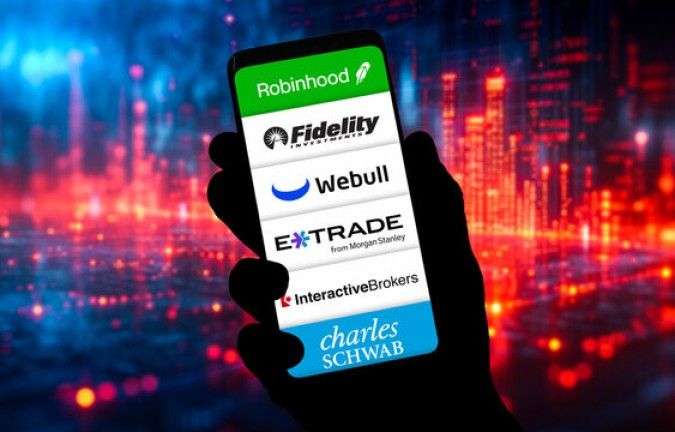
Your choice of broker is the final bridge to the market. While "commission-free" trading is now the norm, you must look at Execution Quality. Some brokers sell your order flow (Payment for Order Flow or PFOF), which might result in you getting a slightly worse price on your fill. For small trades, this is negligible; for large positions, it can cost thousands over a year.
Top-Tier Execution Platforms:
Interactive Brokers (IBKR): The gold standard for international access and low margin rates. Their TWS (Trader Workstation) is complex but provides professional-grade control.
Thinkorswim (Schwab): Widely considered the best all-around platform for options traders. Its "Paper Money" feature is an industry-leading simulator for testing tools without real risk.
TradeStation: Built for technical traders and system developers. Its "EasyLanguage" allows for the creation of incredibly complex automated systems.
Journaling and Behavioral Analysis
The tool most often ignored by retail traders is the **trading journal**. Without a record of your trades, you are repeating the same mistakes without a feedback loop. Digital journals like TraderSync and Tradervue allow you to upload your trade history and see precisely where you are losing money.
Do you lose money on Fridays? Do you lose money when you trade stocks under 10 dollars? A digital journal will tell you. It provides a "statistical MRI" of your behavior, allowing you to stop doing what doesn't work and double down on what does. This is the single fastest way to improve your P&L (Profit and Loss).
The "Optimal Retail" Stack Strategy
If you are starting your journey, do not overwhelm yourself. Here is a balanced, cost-effective stack for a professional-grade experience:
1. Charting: TradingView (Free or Pro version)
2. Research: Seeking Alpha (for deep dives) and Finviz (for screening)
3. Execution: Thinkorswim (for the tools) or Interactive Brokers (for the rates)
4. Journaling: TraderSync (to find your mistakes)
Cost vs. Value Optimization
Trading tools are an investment, not an expense. However, every dollar you spend on a subscription is a dollar your trades must earn back before you are profitable. A common trap is "subscription creep," where a trader spends 500 dollars a month on tools while only trading with a 2,000-dollar account. This creates a mathematical hurdle that is almost impossible to overcome.
Calculate your Tool-to-Capital Ratio. Professional traders generally keep their tool costs below 1% to 2% of their total trading capital per year. If your account is small, leverage free resources like ChartMill or StockCharts until your profit justifies the upgrade to institutional software. The best tool in the world cannot fix a poor strategy, but a great strategy is amplified by the right tools.
The objective of stock trading tools is to provide a decision-making edge. By automating the mundane, accelerating the research, and identifying the patterns, these tools allow you to focus on the only thing that matters: managing risk and capturing profit. As the market continues its digital transformation, staying current with the best software is not just an advantage—it is a requirement for survival.