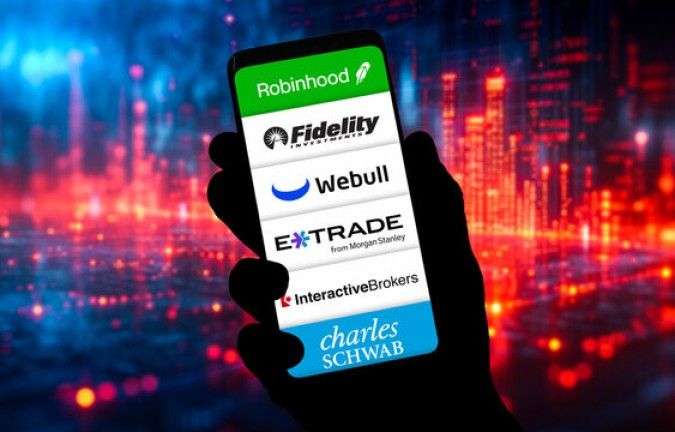
The Investor’s Guide to the Best Low-Cost Stock Trading Platforms
Strategic Analysis of Fee Structures, Technology Integration, and Brokerage Value Propositions
Democratization of Wall Street
The transition from traditional floor-based shouting matches to sophisticated mobile interfaces represents one of the most significant shifts in financial history. For decades, institutional gatekeepers controlled access to the equity markets, charging substantial commissions that eroded the returns of small-scale investors. Today, the "low-cost" revolution has completely inverted this model, placing professional-grade tools into the hands of anyone with a smartphone and a few dollars.
Democratization, however, brings its own set of complexities. When the price of entry is zero, the business model of the provider shifts. Investors must now look beyond the sticker price of "zero-commission" trades and analyze the underlying infrastructure that powers their chosen platform. This guide serves as a technical roadmap for identifying which low-cost platform aligns with your specific financial trajectory, risk tolerance, and technological preferences.
The Hidden Mechanics of Low-Cost Trading
If a brokerage does not charge you a commission to buy or sell a stock, how does it survive? Understanding this is vital for every serious investor. Most low-cost platforms generate revenue through three primary channels: Payment for Order Flow (PFOF), interest on uninvested cash, and securities lending.
Furthermore, brokerages profit from the spread between the interest they earn on your idle cash and the interest they pay you. Some platforms default this cash to a low-interest "sweep" account unless you manually move it. For the cost-conscious investor, maximizing "Cash Sweep" rates is just as important as avoiding commissions.
Selection Criteria for Modern Platforms
To rank the best platforms, we utilize a multi-dimensional scoring system that prioritizes long-term value over short-term gimmicks. The primary metrics include:
- Execution Quality: How close the final price is to the national best bid/offer.
- Fractional Share Access: The ability to buy $5 worth of a high-priced stock like Amazon or Costco.
- Educational Resources: Real-time news, analyst reports, and historical data.
- Support Infrastructure: Availability of 24/7 human assistance versus purely automated bots.
Top-Tier Low-Cost Brokerage Comparison
Each platform specializes in a specific niche. While they all offer low-cost trading, the "best" depends on whether you are a passive long-term holder or an active tactical trader.
| Platform | Best For | Stock Commission | Options Base Fee | Account Minimum |
|---|---|---|---|---|
| Fidelity | All-Around / Retirement | $0.00 | $0.00 + $0.65/contract | $0.00 |
| Charles Schwab | Research & Integration | $0.00 | $0.00 + $0.65/contract | $0.00 |
| Robinhood | Mobile UX / Crypto | $0.00 | $0.00 (commission free) | $0.00 |
| Vanguard | Long-term Buy & Hold | $0.00 | $0.00 + $1.00/contract | $0.00 |
| Interactive Brokers | Professional / Global | $0.00 (Lite plan) | Variable (tiered) | $0.00 |
Fidelity: The Comprehensive Powerhouse
Fidelity has consistently led the market by eliminating more than just stock commissions. They were the first major brokerage to offer "Zero Index Funds"—mutual funds with a 0% expense ratio. This makes them a top choice for the cost-sensitive retirement saver who wants every penny working for them.
Charles Schwab: Merging Quality and Value
Since the acquisition of TD Ameritrade, Charles Schwab has inherited the industry-leading "thinkorswim" platform. This gives low-cost investors access to some of the most sophisticated technical analysis tools available, without the professional price tag.
Schwab is particularly effective for those who want a "one-stop-shop" for their banking and investing. Their High Yield Investor Checking account links directly to the brokerage, offering an ATM fee-reimbursement policy that is among the best in the United States. For the globetrotting investor, this peripheral cost saving is as significant as zero-commission trading.
Robinhood: The Mobile-First Disruptor
While established giants offer more tools, Robinhood remains the king of the mobile user interface. They simplified the complex world of options and margin into an experience that feels as intuitive as social media. However, this ease of use requires high personal discipline.
Robinhood’s Gold subscription ($5/month) provides 3% matching on IRA contributions and higher interest on uninvested cash. For high-balance users, the math often favors paying the subscription fee to unlock these yields, highlighting that sometimes "low cost" is achieved through a modest membership fee rather than being purely free.
Exposing the "Zero-Fee" Illusion
While commissions are gone, other fees remain. Investors who ignore these can find their returns siphoned off by administrative costs.
- ACATS Transfer Fee: Most brokers charge $50 to $100 if you want to move your assets to a different platform.
- Reorganization Fees: Charges for processing stock splits or mandatory corporate actions.
- Paper Statement Fees: Always opt for digital delivery to avoid $2 to $5 monthly "convenience" charges.
- Margin Interest: If you borrow money to trade, the interest rates can range from 6% to 13%. Interactive Brokers historically offers the lowest rates in this category.
The Mathematics of Expense Ratios
Low-cost trading isn't just about the platform; it's about the products you buy on that platform. If you use a free broker but buy an ETF with a 0.75% expense ratio, you are still losing significant capital over time.
Compare an investment of $50,000 growing at 7% annually over 30 years under two different fee scenarios:
Scenario A (Low-Cost): 0.05% Expense Ratio
- Final Balance: Approximately $374,000
- Total Fees Paid: ~$6,000
Scenario B (High-Cost): 0.85% Expense Ratio
- Final Balance: Approximately $295,000
- Total Fees Paid: ~$85,000
By choosing a low-cost platform and low-cost index funds, you keep an extra $79,000. This is the power of minimizing financial friction.
Security, Insurance, and Risk Management
A low-cost platform is only a value if your assets are safe. In the U.S., you must verify that any platform you choose is a member of the SIPC (Securities Investor Protection Corporation). SIPC protects customers up to $500,000 (including $250,000 for cash claims) if the brokerage fails.
Beyond SIPC, many major brokers like Schwab and Fidelity carry "excess of SIPC" insurance through Lloyd's of London, which can cover hundreds of millions of dollars in aggregate. As an investor, the "cost" of using an uninsured, fly-by-night platform is the potential total loss of principal—a risk no rational actor should take.
The Psychology of Frictionless Trading
There is a hidden behavioral cost to low-cost platforms: the temptation to over-trade. When it cost $29.95 to execute a trade in the 1990s, investors were forced to be deliberate. Now that it is free, the "urge to act" can lead to excessive turnover and tax inefficiency.
Every time you sell a winning stock in less than a year, you trigger short-term capital gains tax—which is significantly higher than the long-term rate. A truly low-cost strategy involves not just choosing the right platform, but practicing "low-turnover" investing. The best platform is the one that provides the tools to help you stay the course, rather than the one that pushes you to trade 50 times a day.