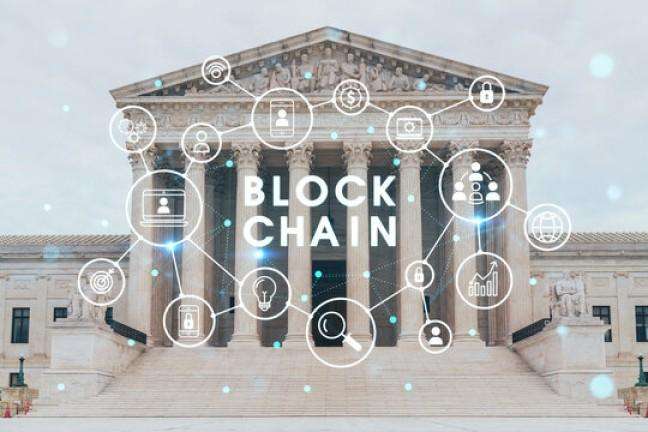
The Architecture of Verifiable Governance: Blockchain in the Public Sector
Public administration in the 21st century remains largely anchored to 19th-century infrastructure. For most governments, the "Single Source of Truth" is a siloed database or, more frequently, a collection of disparate paper records that are vulnerable to corruption, administrative friction, and human error. Blockchain technology offers a radical alternative: a shared, immutable, and verifiable ledger that can restore public trust while slashing the astronomical costs of bureaucracy.
From a financial expert's perspective, the implementation of blockchain in government is not merely a technological upgrade; it is a clinical exercise in operational efficiency. By moving away from centralized gatekeeping toward distributed verification, governments can eliminate redundant intermediaries, prevent the "leakage" of tax dollars, and provide citizens with self-sovereign control over their data. This article dissects the high-impact applications of blockchain within the public sector, providing a professional view of the structural ROI of digital governance.
The Fiscal Paradigm Shift: Reducing the Cost of Trust
In traditional government, trust is manufactured through layers of human oversight. If a citizen wants to prove their eligibility for a benefit, they must provide documentation that is then verified by a civil servant, who is in turn audited by another department. This creates an "Administrative Tax" on every transaction between the state and the citizen. Blockchain replaces this human-centric verification with a decentralized protocol, where the validity of data is mathematically guaranteed.
By automating this verification process, governments can move toward Real-Time Auditing. Instead of waiting for a quarterly or annual report to find financial discrepancies, the immutable nature of on-chain data allows for the instantaneous tracking of every tax dollar. This level of transparency significantly reduces the opportunity for embezzlement and administrative fraud, which globally accounts for hundreds of billions of dollars in lost public funds every year.
Digital Identity and Self-Sovereign Identity (SSI)
Identity is the foundational layer of all government services. Currently, identities are "rented" from centralized authorities (passports, social security numbers, birth certificates). These are susceptible to theft and require constant re-verification. Self-Sovereign Identity (SSI) allows citizens to own and control their own digital credentials, sharing only what is necessary (e.g., proving you are over 21 without revealing your exact birth date or address).
| Feature | Legacy Identity Systems | Blockchain-Based SSI |
|---|---|---|
| Data Ownership | Held in government silos | Controlled by the individual |
| Verification Speed | Days or weeks for manual checks | Instantaneous via zero-knowledge proofs |
| Security Risk | Centralized databases are "Honey Pots" | Distributed; no single point of failure |
| Interoperability | Often restricted by department | Cross-departmental and cross-border |
In the United States, identity theft costs the government and individuals over 50 billion dollars annually. By implementing a decentralized identity framework, the government can eliminate the "Social Security Number" as a master key for fraud. Instead, citizens would use a cryptographically secure wallet to provide verifiable claims, drastically reducing the success rate of phishing and synthetic identity attacks.
Land Titles and Property Rights
The integrity of a nation's economy depends on the clarity of its property rights. In many jurisdictions, land registries are a labyrinth of paper deeds and conflicting claims. Land Title Tokenization turns property rights into a verifiable on-chain asset. This prevents the fraudulent sale of land and ensures that liens, mortgages, and transfers are recorded in a permanent, chronological order that cannot be altered retroactively.
Jurisdictions like Cook County, Illinois, have already experimented with blockchain for land records to prevent title fraud. When a title is recorded on a blockchain, the "Chain of Custody" is visible to all parties. This transparency reduces the cost of title insurance and speeds up the closing process for real estate transactions, which are currently bogged down by weeks of manual record searching and legal reconciliation.
Transparency in Public Procurement
Government procurement—the process of buying goods and services—is one of the largest sources of fiscal leakage. Bidding processes are often opaque, making them ripe for collusion and kickbacks. By moving the procurement process to a public blockchain, every bid, contract award, and payment becomes a matter of public record.
Smart contracts can automate payments based on verifiable milestones. For example, a construction company could be paid automatically as sensors verify the completion of a road's foundation. This removes the "middleman" from the payment cycle, reducing delays and ensuring that taxpayer money is only released when the work is actually performed.
Governments can use blockchain to track the provenance of critical supplies, such as vaccines or defense components. This ensures that the government is receiving authentic products and prevents the infiltration of counterfeit goods into the public supply chain.
Central Bank Digital Currencies (CBDCs) and Monetary Policy
The transition from physical cash to a Central Bank Digital Currency (CBDC) represents the ultimate fusion of monetary policy and blockchain technology. A digital dollar would allow the Federal Reserve to implement policy with surgical precision. Unlike current systems, where stimulus checks take weeks to arrive via mail or bank transfer, a CBDC would allow for the instantaneous disbursement of funds directly to a citizen's digital wallet.
However, the financial yield of a CBDC must be balanced against privacy concerns. A programmable currency could allow a government to track every transaction, a "Panopticon" effect that raises significant constitutional questions in the US. The expert consensus suggests that a successful USD-CBDC must utilize Zero-Knowledge Proofs to maintain transaction privacy while ensuring regulatory compliance (AML/KYC).
Efficient Benefit Distribution
Distributing social security, unemployment benefits, or disaster relief is currently a high-friction process. A significant portion of these funds is lost to "administrative overhead" or fraudulent claims. Blockchain allows for the creation of Condition-Based Transfers. Funds can be programmed to be spent only at authorized vendors or for specific purposes, ensuring that relief reaches the intended target without intermediate "handling" by bureaucratic layers.
Projected ROI for digitizing 1 million government records via Blockchain.
The Frontier of Voting Integrity
In a polarized political climate, the integrity of the ballot is the most vital asset a democracy possesses. Blockchain offers an auditable, anonymous, and tamper-proof voting mechanism. Each vote is a transaction on the ledger, and because the ledger is immutable, once a vote is cast, it cannot be deleted or altered by a partisan official.
Implementation Challenges and ROI
The barriers to government blockchain adoption are rarely technical; they are cultural and regulatory. Legacy institutions often resist transparency because it exposes inefficiency. Furthermore, the "Oracle Problem"—how to ensure that real-world data entering the blockchain is accurate—requires significant human-tech integration.
However, the long-term ROI is undeniable. By reducing the "Cost of Verification" to near zero, governments can reallocate billions of dollars from administrative middle-management toward front-line services like education, infrastructure, and healthcare. The transition period will require significant capital investment in "Digital Twin" infrastructure, where paper records are gradually mirrored on-chain until the legacy system can be safely decommissioned.
The Future of Automatable Law
The ultimate destination of this technology is Programmable Governance. Imagine a world where tax laws are written in code, and sales tax is collected and distributed automatically at the point of sale. This removes the burden of compliance from the business owner and the burden of collection from the state. It represents a move toward a more "Fluid Government" that operates in the background, serving as a reliable utility rather than a bureaucratic obstacle.
Blockchain in government is not about "replacing" officials; it is about augmenting the integrity of the office. By removing the ability to manipulate data, we force the state to operate with a level of honesty that has been technically impossible until now. For the taxpayer, this is the ultimate investment: a government that is finally as efficient as the digital world it governs.