
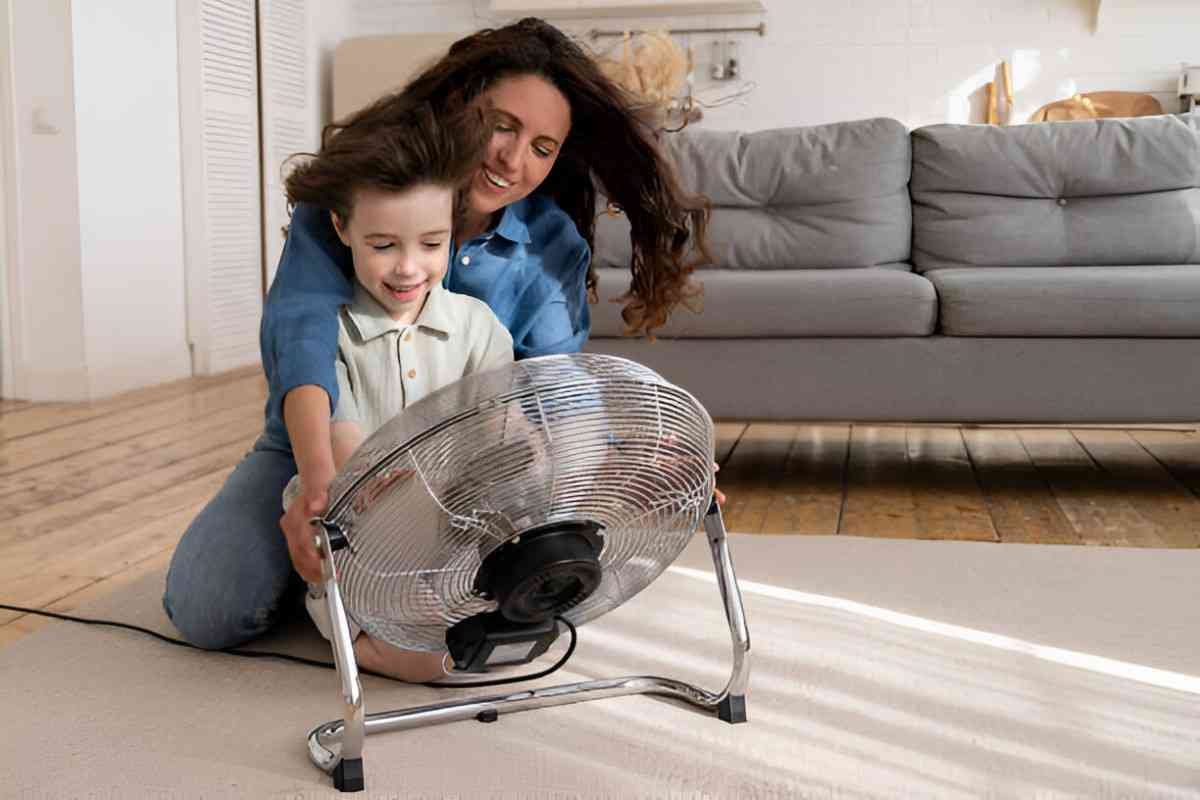
I’ve always been keen on finding ways to save money, especially when it comes to energy bills. With the cost of electricity continuously rising, it’s important to look for cost-effective solutions to manage our consumption. One of the simplest yet often overlooked solutions is the use of air circulators. While many people immediately think of air conditioning as the go-to cooling solution, air circulators can provide substantial savings without the high price tag. In this article, I’ll share how air circulators work, how they compare to other cooling methods, and how they can save you money.
Table of Contents
What Is an Air Circulator?
An air circulator is a type of fan designed to move air around a room or space. Unlike regular fans, which simply blow air in one direction, air circulators are designed to distribute the air evenly, creating a more consistent flow. This can be especially useful when trying to maintain a comfortable temperature across a larger area or room. Air circulators don’t cool the air directly but help air conditioning systems work more efficiently by circulating cooled air.
How Air Circulators Help You Save Money
I’ve found that air circulators can help reduce the need for air conditioning in many cases, especially during warmer months. Here’s why they’re effective in saving money:
1. Reducing Air Conditioning Use
Air conditioning units consume a lot of electricity. The more you run your air conditioner, the higher your energy bills. Air circulators, however, use significantly less power. They don’t cool the air but help to distribute cool air from the AC more efficiently, allowing you to raise the temperature on your thermostat without sacrificing comfort. By using an air circulator in combination with your air conditioning unit, you can reduce the overall energy consumption of your cooling system.
2. Lowering Thermostat Temperature
When I started using an air circulator, I realized I could set my thermostat a few degrees higher and still stay comfortable. The circulating fan helps move the cool air more effectively, creating a more even temperature distribution. For example, raising the temperature on your thermostat by 3–5 degrees might not affect your comfort but can lead to significant savings over time.
Let’s look at a comparison:
| Device | Average Power Consumption | Annual Operating Cost (based on 8 hrs/day) |
|---|---|---|
| Air Conditioner (Central) | 3,500 watts | $400–$600 |
| Air Circulator (Fan) | 30–75 watts | $30–$60 |
As you can see, an air circulator consumes far less power, and over the course of a year, it can save you hundreds of dollars compared to running an air conditioner constantly.
3. Improving Air Flow in Your Home
I noticed that by using an air circulator, I could improve air flow in rooms that tend to feel stuffy. Instead of relying solely on the AC to cool down a space, the circulator pushes air around the room, making it feel cooler and more comfortable. This increased airflow can reduce the need for cooling systems to work at full capacity.
4. Complementing Other Energy-Saving Devices
If you already use other energy-saving devices, such as smart thermostats, you can further enhance their efficiency by adding an air circulator. A smart thermostat can help you set the most efficient temperature for your home, and the air circulator can ensure the temperature is maintained evenly across the room, so your cooling system doesn’t have to work as hard. This combination can lead to greater savings on your energy bills.
Air Circulators vs. Regular Fans
When I first started exploring air circulators, I wondered how they compared to regular fans. They may look similar, but they operate differently and offer different benefits. Here’s a comparison of the two:
| Feature | Air Circulator | Regular Fan |
|---|---|---|
| Air Flow Direction | Moves air in multiple directions | Moves air in one direction |
| Power Consumption | Low (30–75 watts) | Low to moderate (50–150 watts) |
| Cooling Effectiveness | Helps distribute cool air efficiently | Limited cooling, mainly for immediate area |
| Noise Level | Quiet | Can be noisy depending on speed |
| Versatility | Can be used in all seasons | Primarily for summer use |
Air circulators tend to be more versatile, as they help in both cooling and circulation, especially in larger spaces. They also operate at a lower power consumption than traditional fans while providing more effective air movement.
The Economics of Using Air Circulators
Let’s take a closer look at the potential savings when using an air circulator compared to an air conditioner. If you’re running an air conditioner for 8 hours a day during the summer, that could easily amount to 240 hours of operation per month. At an average power consumption of 3,500 watts (3.5 kW), the cost of running an air conditioner for one hour could be around 50 cents, depending on your local electricity rate. Over the course of the summer, that could add up to over $100 a month.
On the other hand, if you use an air circulator that consumes 75 watts (0.075 kW), the cost per hour of operation is just 1 cent. Running the circulator for 8 hours a day for a month would cost only about $2.40. By combining the use of an air circulator with your air conditioning system, you can drastically reduce the amount of time your AC needs to be on, leading to significant savings.
Example Calculation
Let’s say you set your thermostat to 78°F instead of 72°F. With the air circulator moving the air around, the room still feels comfortable at 78°F. By raising the temperature by 6 degrees, you could save about 15–20% on your air conditioning usage. If your air conditioner costs $120 per month to operate at 72°F, raising the temperature to 78°F could save you $18–$24 each month. That’s over $200 in savings every summer.
Environmental Benefits of Air Circulators
Besides saving money, using air circulators also contributes to reducing your carbon footprint. Since air circulators use less energy than air conditioners, they help lower the overall demand for electricity, which often comes from fossil fuels. By relying on air circulators for air circulation, you’re doing your part to reduce greenhouse gas emissions while keeping your energy bills low.
Conclusion: Why I Recommend Air Circulators
In my experience, air circulators have been a game-changer for saving money on energy bills. They help distribute cool air more efficiently, reduce the load on air conditioning units, and can be used year-round. Whether you want to improve air circulation in your home or complement your air conditioner to lower its usage, an air circulator is a smart and cost-effective solution.
By using an air circulator in combination with a well-maintained air conditioning system and smart thermostat, I’ve been able to reduce my cooling costs significantly. While the upfront cost of an air circulator is relatively small, the long-term savings make it a worthwhile investment. If you’re looking for a way to lower your energy consumption and save money, I highly recommend giving air circulators a try.


