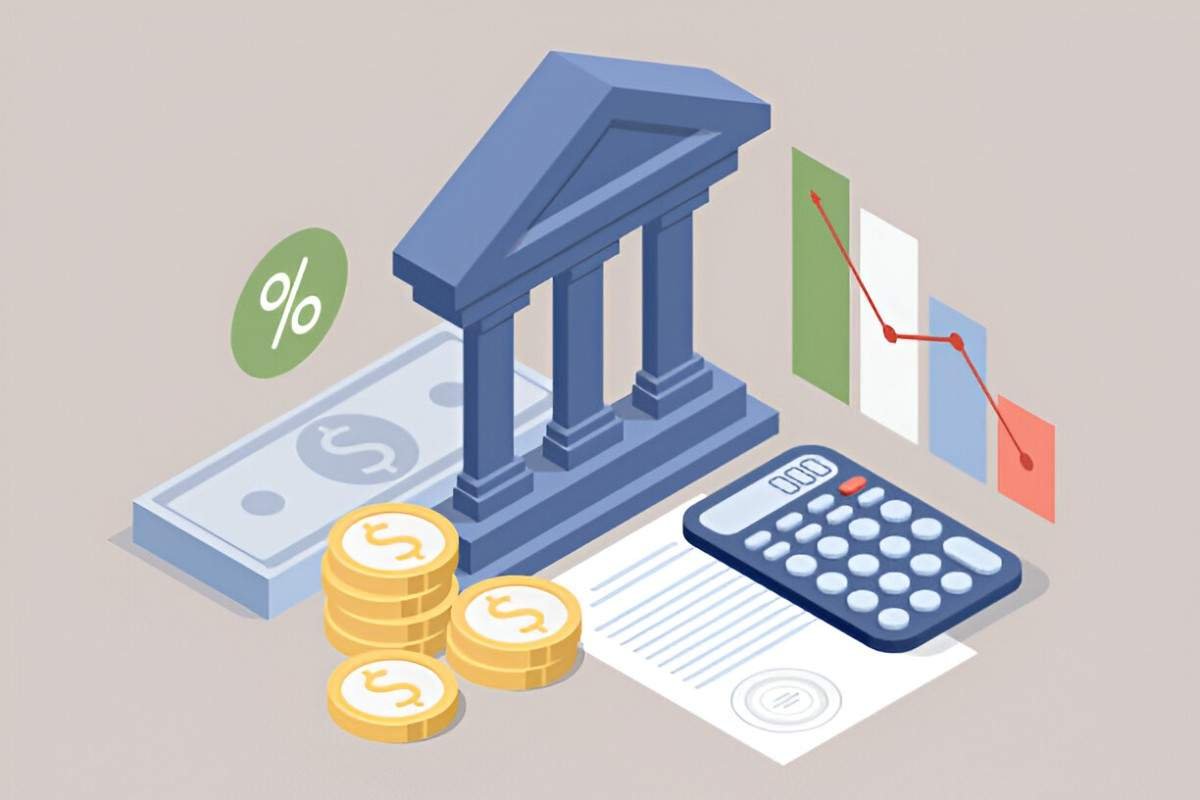
Unraveling the Uncommitted Facility: Definition and Practical Insights
In the world of corporate finance, liquidity management is a cornerstone of sustainable business operations. One of the tools that companies often use to ensure liquidity is an uncommitted facility. While it may sound like a niche term, understanding its mechanics, advantages, and limitations is crucial for financial professionals, business owners, and even investors. In […]
Unraveling the Uncommitted Facility: Definition and Practical Insights Read More »


![# Undischarged Bankrupt: Understanding the Legal and Financial Implications Bankruptcy is a legal process that provides relief to individuals and businesses overwhelmed by debt. However, the term "undischarged bankrupt" is often misunderstood, even by those who have experienced financial distress. In this article, I will explore the concept of undischarged bankruptcy, its legal and financial implications, and how it impacts individuals in the United States. I will also provide examples, calculations, and tables to help you grasp the nuances of this complex topic. ## What Does It Mean to Be an Undischarged Bankrupt? When someone files for bankruptcy, they are declared bankrupt by a court. However, the bankruptcy process does not end immediately. The period between the filing and the official discharge is when the individual is considered an **undischarged bankrupt**. During this time, the person remains under the legal and financial constraints imposed by bankruptcy laws. In the U.S., bankruptcy is governed by federal law, primarily under the **Bankruptcy Code** (Title 11 of the United States Code). The most common types of bankruptcy for individuals are **Chapter 7** and **Chapter 13**. Each has different implications for undischarged bankrupts. ### Chapter 7 Bankruptcy Chapter 7, often called "liquidation bankruptcy," involves the sale of non-exempt assets to pay off creditors. The process typically lasts 3-6 months, after which the debtor receives a discharge. Until that discharge is granted, the debtor is an undischarged bankrupt. ### Chapter 13 Bankruptcy Chapter 13, known as "reorganization bankruptcy," allows individuals to create a repayment plan to settle debts over 3-5 years. During this period, the debtor is also considered an undischarged bankrupt. ## Legal Implications of Being an Undischarged Bankrupt Being an undischarged bankrupt comes with significant legal restrictions. These are designed to protect creditors and ensure the bankruptcy process is fair and transparent. ### Restrictions on Financial Activities Undischarged bankrupts face several limitations on their financial activities. For example: - **Credit Restrictions**: They cannot obtain credit above a certain amount without disclosing their bankruptcy status. In most cases, this limit is [latex]\$1,000[/latex] or more, depending on the jurisdiction. - **Asset Control**: They cannot sell or transfer assets without court approval. This ensures that assets are preserved for creditors. - **Business Activities**: If the individual is a business owner, they may be restricted from managing or directing the company. ### Legal Consequences of Non-Compliance Failure to comply with these restrictions can result in severe penalties, including: - **Denial of Discharge**: The court may refuse to grant a discharge, leaving the debtor liable for their debts. - **Criminal Charges**: In extreme cases, non-compliance can lead to criminal charges, especially if fraud is involved. ### Example: Credit Restrictions in Practice Let’s say John is an undischarged bankrupt under Chapter 7. He wants to take out a loan to buy a car. The lender asks if he has filed for bankruptcy. John must disclose his status, and the lender may deny the loan or impose stricter terms. If John fails to disclose his status and takes out a loan exceeding [latex]\$1,000[/latex], he could face legal consequences. ## Financial Implications of Being an Undischarged Bankrupt The financial implications of being an undischarged bankrupt are profound and long-lasting. They affect credit scores, employment opportunities, and even personal relationships. ### Impact on Credit Score Bankruptcy has a devastating effect on credit scores. A Chapter 7 bankruptcy can remain on a credit report for up to 10 years, while a Chapter 13 bankruptcy stays for 7 years. During the undischarged period, the individual’s credit score is at its lowest, making it difficult to secure loans, credit cards, or even rent an apartment. #### Example: Calculating Credit Score Impact Suppose Jane has a credit score of 720 before filing for Chapter 7 bankruptcy. After filing, her score drops by 200 points, leaving her with a score of 520. This drop can be represented as: [latex]\text{New Credit Score} = \text{Original Credit Score} - \text{Credit Score Drop}[/latex] [latex]\text{New Credit Score} = 720 - 200 = 520[/latex] ### Employment and Professional Licensing Certain professions, such as law, finance, and real estate, require clean financial records. Being an undischarged bankrupt can lead to the suspension or revocation of professional licenses. Employers may also view bankruptcy as a red flag, especially for roles involving financial responsibility. ### Personal Relationships The stigma of bankruptcy can strain personal relationships. Friends and family may view the individual as financially irresponsible, even if the bankruptcy resulted from circumstances beyond their control, such as medical bills or job loss. ## Comparing Chapter 7 and Chapter 13 Bankruptcy To better understand the implications of being an undischarged bankrupt, let’s compare Chapter 7 and Chapter 13 bankruptcy. | **Aspect** | **Chapter 7** | **Chapter 13** | |---------------------------|----------------------------------------|----------------------------------------| | **Duration** | 3-6 months | 3-5 years | | **Asset Liquidation** | Non-exempt assets sold | No asset liquidation | | **Repayment Plan** | No repayment plan | Monthly payments based on income | | **Credit Score Impact** | Remains on report for 10 years | Remains on report for 7 years | | **Eligibility** | Must pass means test | Must have regular income | ## Mathematical Modeling of Bankruptcy Repayment To illustrate the financial burden of bankruptcy, let’s model a repayment plan under Chapter 13. ### Example: Chapter 13 Repayment Plan Suppose Tom has [latex]\$50,000[/latex] in unsecured debt and files for Chapter 13 bankruptcy. The court approves a 5-year repayment plan at an interest rate of [latex]5\%[/latex]. His monthly payment can be calculated using the formula for an amortizing loan: [latex]M = P \times \frac{r(1 + r)^n}{(1 + r)^n - 1}[/latex] Where: - [latex]M[/latex] = monthly payment - [latex]P[/latex] = principal amount ([latex]\$50,000[/latex]) - [latex]r[/latex] = monthly interest rate ([latex]\frac{5\%}{12} = 0.004167[/latex]) - [latex]n[/latex] = number of payments ([latex]5 \times 12 = 60[/latex]) Plugging in the values: [latex]M = 50,000 \times \frac{0.004167(1 + 0.004167)^{60}}{(1 + 0.004167)^{60} - 1}[/latex] [latex]M \approx \$943.56[/latex] Tom must pay approximately [latex]\$943.56[/latex] per month for 5 years to settle his debt. ## Socioeconomic Factors Influencing Bankruptcy in the U.S. Bankruptcy is not just a legal or financial issue; it is deeply intertwined with socioeconomic factors. In the U.S., these factors include income inequality, healthcare costs, and access to education. ### Income Inequality Low-income households are more likely to file for bankruptcy due to limited financial buffers. A single unexpected expense, such as a car repair or medical bill, can push them into insolvency. ### Healthcare Costs Medical bills are a leading cause of bankruptcy in the U.S. Even with insurance, out-of-pocket expenses can be overwhelming. According to a study by the American Journal of Public Health, **66.5%** of bankruptcies are tied to medical issues. ### Access to Education Student loan debt is another significant factor. While student loans are generally not dischargeable in bankruptcy, they contribute to financial stress, making individuals more vulnerable to other forms of debt. ## Strategies for Rebuilding Financial Health Being an undischarged bankrupt is challenging, but it is not the end of the road. Here are some strategies to rebuild financial health: ### Budgeting and Expense Management Creating a strict budget is essential. Track income and expenses to identify areas where you can cut costs. Tools like the **50/30/20 rule** can help: - **50%** for needs (rent, utilities, groceries) - **30%** for wants (entertainment, dining out) - **20%** for savings and debt repayment ### Rebuilding Credit Start by obtaining a secured credit card or a credit-builder loan. Make small purchases and pay off the balance in full each month to demonstrate responsible credit use. ### Seeking Professional Help Consult a financial advisor or credit counselor. They can provide personalized advice and help you navigate the complexities of post-bankruptcy life. ## Conclusion Being an undischarged bankrupt is a challenging and often misunderstood status. It comes with significant legal and financial implications that can affect every aspect of life. However, with proper planning and discipline, it is possible to rebuild and emerge stronger. By understanding the nuances of bankruptcy, you can make informed decisions and take control of your financial future. If you or someone you know is facing bankruptcy, remember that you are not alone. Millions of Americans have walked this path and come out the other side. With the right strategies and support, you can too. --- This article is designed to provide a comprehensive understanding of undischarged bankruptcy in the U.S. By incorporating legal, financial, and socioeconomic perspectives, I hope to offer a balanced and insightful view of this complex topic. If you have any questions or need further clarification, feel free to reach out.](https://accountend.com/wp-content/uploads/2023/10/Undisclosed-Factoring.jpg "Undisclosed Factoring: A Guide to Confidential Business Financing")