Accounting

Jobbing Backward in Financial Management

Unlocking the Concept of “Jobbing Backward” in Financial Management

Introduction I often find financial management strategies that seem counterintuitive at first glance but reveal deep insights when examined closely. One such concept is jobbing backward, a method used in financial planning and risk management to optimize outcomes by working from the desired result back to the present. Unlike traditional forward-looking approaches, jobbing backward forces […]

Unlocking the Concept of “Jobbing Backward” in Financial Management Read More »

Joint Accounts

Demystifying Joint Accounts: A Beginner’s Guide

A joint account is a financial arrangement where two or more individuals share ownership and have equal access to a single account. Joint accounts are commonly used for managing shared finances, such as household expenses, family savings, or business operations. Understanding the features, benefits, and considerations of joint accounts is essential for individuals seeking to

Demystifying Joint Accounts: A Beginner’s Guide Read More »

Just In Time

Understanding “Just In Time” (JIT) Inventory Management: A Simple Guide

Just In Time (JIT) is an inventory management strategy where materials and products are produced or acquired only as needed for use or sale. This method helps businesses reduce inventory costs and increase efficiency. What is Just In Time (JIT)? The Just In Time (JIT) system originated in Japan and was popularized by Toyota in

Understanding “Just In Time” (JIT) Inventory Management: A Simple Guide Read More »

Mastering Landing Account A Beginner's Guide to Understanding Financial Transactions

Mastering Landing Account: A Beginner’s Guide to Understanding Financial Transactions

Introduction I remember the first time I encountered a ledger account—rows of numbers, debits, credits, and balances that seemed like an indecipherable code. But as I dug deeper, I realized that ledger accounts are the backbone of financial accounting. They record every financial transaction, ensuring accuracy and transparency in business operations. If you’re new to

Mastering Landing Account: A Beginner’s Guide to Understanding Financial Transactions Read More »

Payment Fraud Schemes

Unraveling Lapping: A Beginner’s Guide to Understanding Payment Fraud Schemes

Payment fraud schemes plague businesses, governments, and individuals, costing the U.S. economy billions annually. Among these schemes, lapping stands out as a deceptive yet straightforward method fraudsters use to conceal stolen funds. In this guide, I dissect lapping—how it works, who commits it, and how to detect it. I provide real-world examples, mathematical models, and

Unraveling Lapping: A Beginner’s Guide to Understanding Payment Fraud Schemes Read More »

Last-In-First-Out Cost

Mastering Last-In-First-Out Cost (LIFO): A Beginner’s Guide to Inventory Valuation

Inventory valuation methods shape financial statements, tax obligations, and business decisions. Among these, Last-In-First-Out (LIFO) stands out for its unique approach—especially in inflationary economies like the U.S. In this guide, I break down LIFO’s mechanics, advantages, drawbacks, and real-world applications so you can master it with confidence. Understanding Inventory Valuation Basics Before diving into LIFO,

Mastering Last-In-First-Out Cost (LIFO): A Beginner’s Guide to Inventory Valuation Read More »

Unveiling the Ledger A Comprehensive Guide for Beginners

Unveiling the Ledger: A Comprehensive Guide for Beginners

Ledger is a fundamental term in the realm of accounting and finance, serving as a cornerstone for organizing and recording financial transactions within a business entity. Understanding the ledger is essential for anyone involved in financial management or analysis, as it provides a detailed account of a company’s financial activities. What is a Ledger? A

Unveiling the Ledger: A Comprehensive Guide for Beginners Read More »

Understanding Life-Cycle Costing Benefits, Methodology, and Practical Application

Understanding Life-Cycle Costing: Benefits, Methodology, and Practical Application

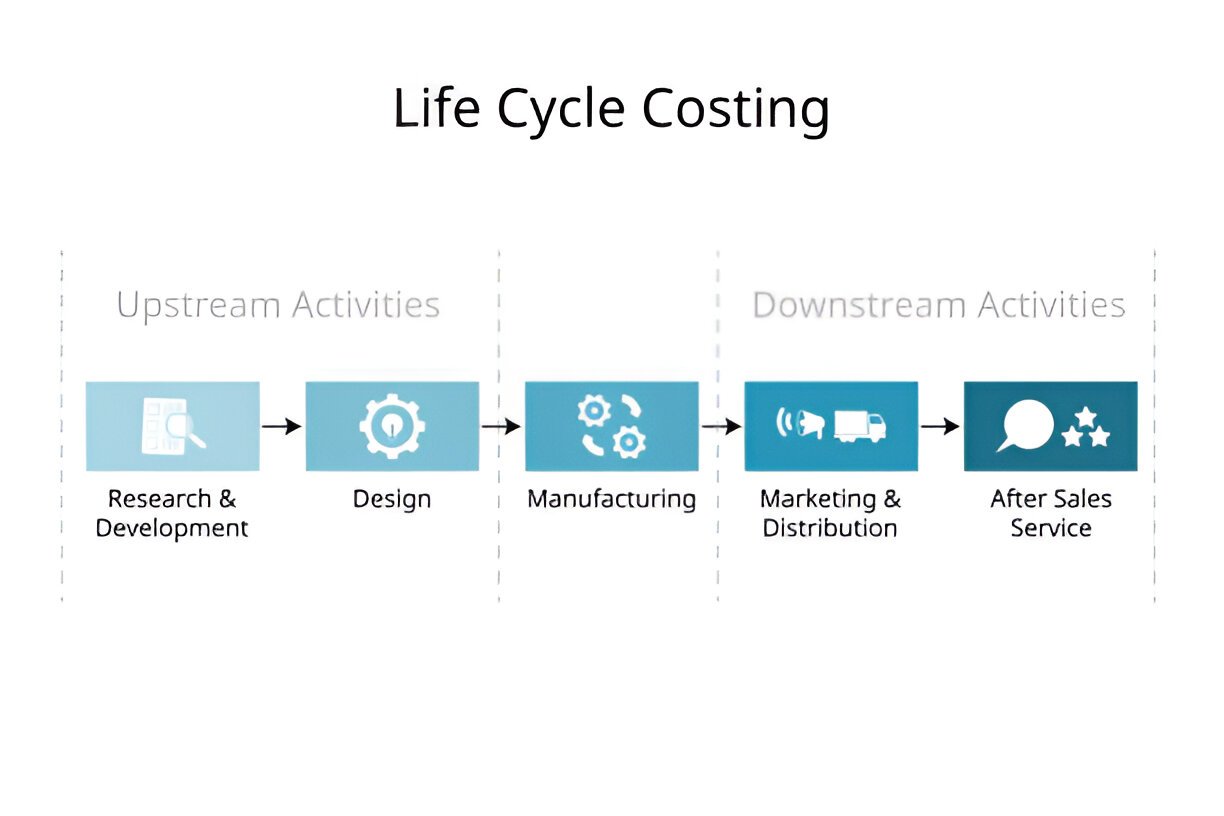
Life-cycle costing is a strategic accounting approach that considers all costs associated with a product or asset throughout its entire life cycle, from initial acquisition to disposal. This method enables businesses to make informed decisions by analyzing the total cost of ownership over the entire life span of a product or asset, rather than just

Understanding Life-Cycle Costing: Benefits, Methodology, and Practical Application Read More »

Scroll to Top