
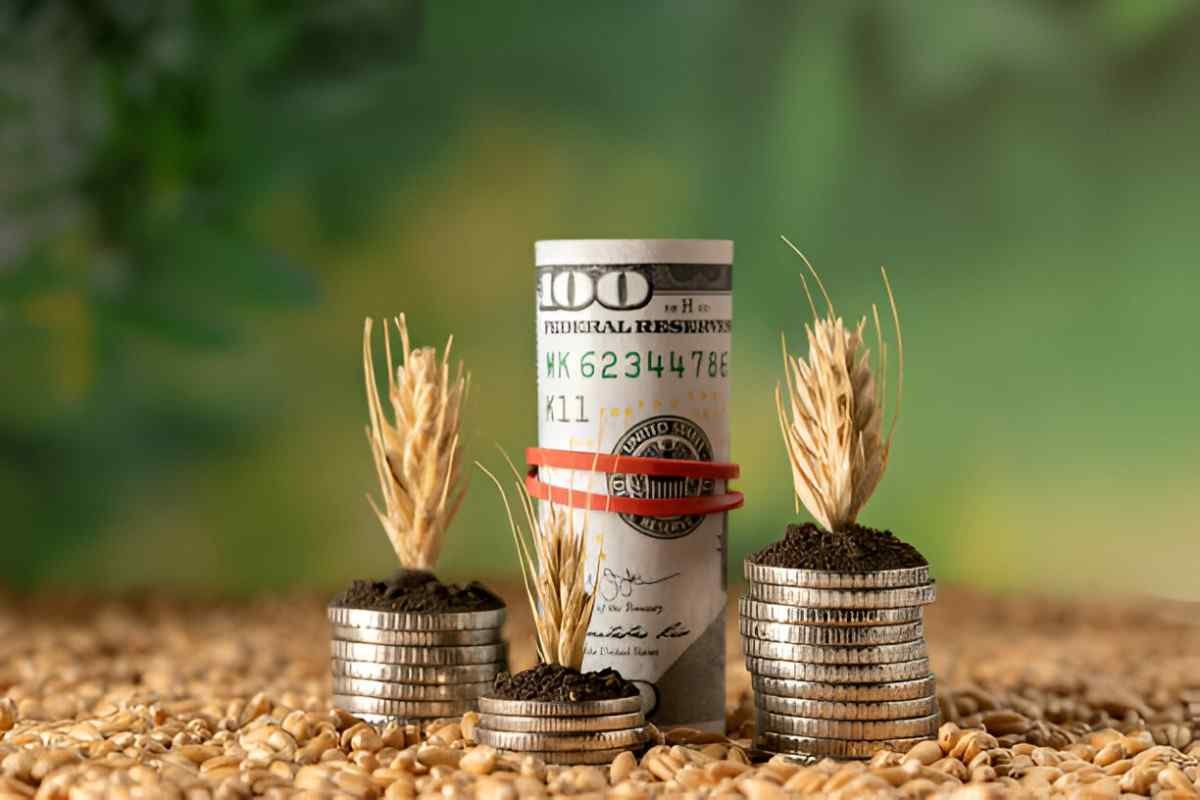
As a finance expert, I often analyze niche investment vehicles that offer diversification and inflation protection. Agricultural commodity mutual funds fit this role, providing exposure to crops, livestock, and soft commodities without direct futures trading. In this guide, I dissect how these funds work, their risk-return dynamics, and their role in a balanced portfolio.
Table of Contents
What Are Agricultural Commodity Mutual Funds?
Agricultural commodity mutual funds pool investor capital to buy futures contracts, ETFs, or equities tied to farm products like corn, soybeans, wheat, coffee, and cattle. Unlike direct commodity investing, these funds offer professional management and liquidity.
Key Characteristics:
- Underlying Assets: Track commodities via futures (e.g., CBOT wheat) or agribusiness stocks (e.g., Deere & Co.).
- Structure: Typically structured as ’40 Act funds, complying with SEC diversification rules.
- Benchmarks: Often follow indices like the S&P GSCI Agriculture Index or Bloomberg Agriculture Subindex.
Why Invest in Agricultural Commodities?
1. Inflation Hedge
Farm commodities tend to rise with inflation. The correlation between the Consumer Price Index (CPI) and agricultural futures from 2000–2023 was \rho=0.62.
2. Portfolio Diversification
Commodities exhibit low correlation with stocks and bonds. A 2022 Vanguard study showed adding a 10% agri-commodity allocation reduced portfolio volatility by 1.8%.
3. Demand Growth
Global population expansion and biofuel mandates boost long-term demand. The USDA projects a 14% rise in corn demand by 2031.
Types of Agricultural Commodity Funds
| Fund Type | Pros | Cons |
|---|---|---|
| Futures-Based | Direct commodity exposure | Contango losses |
| Equity-Based | Dividends, no futures rolling | Indirect exposure |
| Mixed-Strategy | Balances futures and equities | Higher expense ratios |
Performance Metrics and Calculations
Rolling Returns
The 5-year rolling return for the iShares Agriculture ETF (COW) from 2018–2023 was:
R_{annual} = \left(\frac{P_{2023}}{P_{2018}}\right)^{\frac{1}{5}} - 1 = 4.7\%Contango Impact
Futures-based funds suffer when near-month contracts are cheaper than distant ones. The loss (L_{contango}) can be estimated as:
L_{contango} = \left(F_{t+1} - F_{t}\right) \times QWhere:
- F_{t+1} = Next-month futures price
- F_{t} = Current futures price
- Q = Contract quantity
Example: If July wheat futures trade at $6.20/bushel and August at $6.05, a fund rolling 1,000 contracts loses:
L_{contango} = (6.05 - 6.20) \times 1,000 = -\$150 \text{ per contract.}Risks to Consider
- Weather Volatility
Droughts or floods can swing prices. The 2012 U.S. drought spiked corn futures by 60%. - Policy Shifts
Ethanol subsidies or export bans (e.g., India’s 2022 wheat export restriction) disrupt markets. - Currency Risk
Commodities are dollar-denominated. A strong dollar hurts global demand.
Tax Treatment
- Futures Funds: 60% long-term / 40% short-term capital gains, regardless of holding period.
- Equity Funds: Standard capital gains tax applies.
Top Agricultural Commodity Mutual Funds
| Fund Name | Expense Ratio | Strategy |
|---|---|---|
| Invesco DB Agriculture (DBA) | 0.93% | Futures-based |
| Fidelity Global Commodity (FFGCX) | 0.86% | Mixed futures/equities |
| VanEck Agribusiness (MOO) | 0.53% | Equity-focused |
How to Allocate
I recommend a 5–10% allocation for moderate-risk portfolios. Pair with:
- Inflation-Protected Securities (TIPS)
- Real Estate (REITs)
Final Thoughts
Agricultural commodity mutual funds suit investors seeking inflation-resistant assets. While volatile, their low correlation with traditional assets enhances portfolio resilience. Evaluate fees, strategy, and tax implications before investing.


