Professional Nerve Centers: The Expert Guide to Stock Trading Terminals
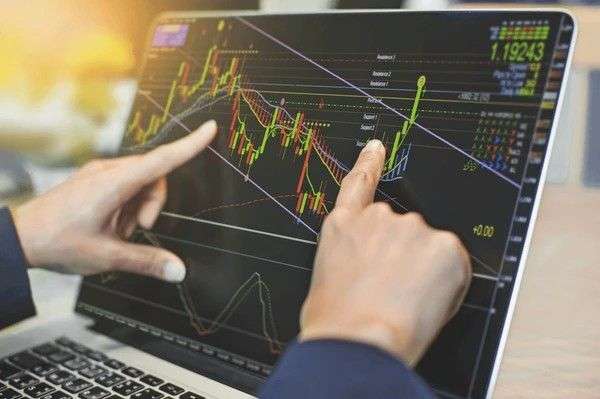
In the high-stakes environment of global equity markets, the difference between a retail "app" and a professional trading terminal is comparable to the difference between a smartphone camera and a satellite imaging array. While a broker's interface facilitates the basic exchange of shares, a terminal provides the raw data, news speed, and execution latency required to capture institutional-grade alpha. For a serious trader, the terminal serves as a command center—a synthesis of real-time feeds, historical databases, and proprietary analytics that turns information into actionable conviction.
The Anatomy of a Trading Terminal
A true trading terminal is defined by three pillars: data depth, execution speed, and customizability. Unlike standard web platforms, terminals often run as standalone desktop applications optimized for multi-monitor setups. They bypass the simplified "user-friendly" interfaces of retail brokers to provide a high-density environment where a trader can monitor dozens of variables simultaneously.
Institutional Giants: Bloomberg & Refinitiv Eikon
For decades, the Bloomberg Terminal has functioned as the "gold standard" for the global financial elite. It is more than a tool; it is a social and data network. With a subscription cost often exceeding $27,000 annually, it remains the domain of hedge funds, central banks, and institutional desks.
Bloomberg’s primary advantage lies in its proprietary data—information on bonds, private equity, and supply chains that simply does not exist elsewhere. Its messaging service, Instant Bloomberg (IB), remains the primary communication channel for the world's most influential market makers. If you are trading credit or complex derivatives, Bloomberg has no peer.
Refinitiv Eikon (Now Workspace)
As the primary competitor to Bloomberg, Refinitiv Eikon provides a more modern, flexible interface. Its integration with Microsoft Excel is widely considered superior, making it the preferred choice for analysts who spend their days building complex financial models. Eikon’s news feed—powered by Reuters—is arguably the fastest in the world for macro-economic events.
Retail Professional Solutions: The New Guard
For the independent professional who does not require the global debt-market depth of Bloomberg, several high-octane alternatives provide comparable equity execution power at a fraction of the cost.
TradingView: The Modern Visual Terminal
Initially dismissed as a social platform, TradingView has evolved into a powerhouse web-based terminal. Its charting engine is the industry standard, utilized by almost every crypto exchange and many retail brokers. While it lacks the raw execution speed of a desktop DMA terminal, its cloud-based alerts and massive library of community-driven indicators make it a primary tool for technical analysts.
DAS Trader Pro: The Execution Specialist
If your strategy involves Day Trading or Scalping, DAS Trader Pro is often the mandatory choice. It is a Direct Access Software (DAS) that connects directly to various ECNs. It is optimized for speed over aesthetics, allowing for "Hot Key" execution that can enter and exit positions in less than 50 milliseconds.
The Mathematics of Execution Cost
Small-scale traders often focus on subscription costs, but professional traders focus on Slippage and Latency Costs. A "free" terminal that is 300 milliseconds slower than a professional one can cost you thousands of dollars in a single month of active trading.
Terminal A (Retail): 450ms latency from market event to display.
Terminal B (Pro): 30ms latency from market event to display.
Difference in Price Awareness: 420ms (0.42 seconds).
Potential Price Discrepancy: $0.05 * 0.42 = $0.021 per share.
On a 2,000 share order, being "late" to the price by 420ms costs:
$42.00 per trade in slippage.
At 10 trades per day, Terminal A costs you $8,400 per month in invisible losses.
Terminal Comparison Grid
This table analyzes the most prominent terminals based on institutional capability and retail accessibility.
| Terminal | User Base | Primary Strength | Est. Monthly Cost |
|---|---|---|---|
| Bloomberg Professional | Institutional / Banks | Unrivaled Fixed Income & Networking | $2,200+ |
| Refinitiv Workspace | Asset Managers | Reuters News & Excel Integration | $1,800+ |
| DAS Trader Pro | Day Traders / Scalpers | Direct Market Access & Speed | $100 - $200 |
| TradingView (Premium) | Technical Analysts | Cloud Charting & Scripting | $30 - $60 |
| Thinkorswim (Schwab) | Retail Power Users | Options Analytics & Free Access | $0 (with account) |
Latency and Direct Market Access (DMA)
Understanding Direct Market Access is crucial. Standard brokers take your order and "route" it where they get paid the most (Payment for Order Flow). A professional terminal allows you to bypass this. You can manually route your order to specific exchanges like ARCA, BATS, or IEX. This is critical when trading stocks with low liquidity or when trying to avoid predatory high-frequency trading algorithms that "front-run" retail orders in dark pools.
Data Infrastructure & Level 2 Specs
Professional terminals require high-quality data feeds (e.g., IQFeed, QuoteMedia). Many retail platforms aggregate data, meaning they show you a "summary" of the market every few hundred milliseconds to save bandwidth. A pro terminal provides a "tick-by-tick" feed, capturing every single transaction as it occurs. This allows for Tape Reading (Time and Sales analysis), a technique used to spot large institutional accumulation before it reflects in the price charts.
Professional Inquiries FAQ
Choosing a stock trading terminal is a significant investment in your professional infrastructure. For the institutional analyst, the Bloomberg ecosystem is unavoidable due to its networking and debt-market dominance. For the independent professional equity trader, the combination of a high-speed execution platform like DAS Trader Pro and a robust charting engine like TradingView offers a "best of both worlds" solution. The ultimate goal of your terminal should be to remove the "fog of war" from the market—providing a crystal-clear, real-time view of the battlefield where every millisecond is a variable in your success.
Institutional market data and terminal pricing current as of . All financial trading involves substantial risk of loss. Professional consultation is recommended for high-capital allocation strategies.