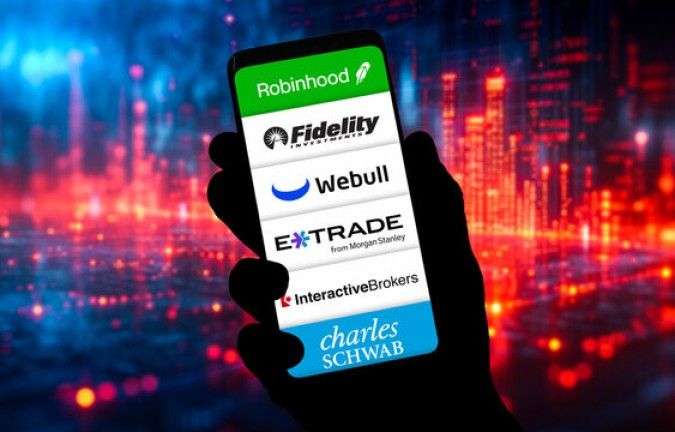
The Modern Investor’s Compass: Evaluating the Best User Friendly Stock Trading Apps
Strategic Analysis of Interface Design, Educational Ecosystems, and Low-Barrier Market Entry
The Democratization of Finance
The transition from traditional brokerage terminals to streamlined mobile applications marks one of the most significant shifts in financial history. For decades, the ability to buy and sell stocks was gatekept by complex software and high-commission brokers. Today, a user can open an account, link a bank, and purchase their first share of a global conglomerate in less than ten minutes. This rapid evolution has brought millions of new participants into the equities market, but it has also redefined what we mean by "user-friendly."
A truly user-friendly app does more than just make things easy; it makes them clear. In the context of finance, simplicity without transparency is a liability. The best platforms on the market today balance an intuitive user experience with the robust data needed to make informed decisions. As we explore the top contenders, we look for apps that reduce friction while enhancing the user’s financial literacy.
Anatomy of a User-Friendly Interface
What specifically makes an app feel "friendly"? It is not just about pretty colors or rounded corners. In the world of finance, user-friendliness is a combination of information hierarchy, onboarding speed, and the reduction of cognitive load. When you open a trading app, you should not feel overwhelmed by flashing red and green numbers.
2. Clean Navigation: A bottom navigation bar that allows you to switch between your portfolio, research, and settings without getting lost in nested menus.
3. Feedback Loops: Instant confirmation of trades and clear notifications about dividend payments or price movements.
Furthermore, the onboarding process is a critical metric. Apps that use modern verification technology to approve accounts in minutes rather than days have a significant edge. However, the most friendly apps are those that grow with the user. They provide a simple starting point for the novice while offering deeper technical analysis tools for those who eventually want more control.
Robinhood: The Icon of Simplicity
Robinhood is often credited—and sometimes criticized—for inventing the modern mobile trading experience. Their design philosophy is stripped-down and minimalist. By removing the traditional clutter of brokerage sites, Robinhood created a platform that feels as intuitive as social media. This simplicity is their greatest strength, particularly for users who find traditional finance intimidating.
However, the "friendliness" of Robinhood comes with a trade-off. Some argue that the gamification of the platform—using confetti or bright colors—encourages over-trading. For the long-term investor, the app remains an excellent tool for basic execution, but it lacks the deep fundamental research tools found on more established platforms.
Fidelity Bloom: The Established Giant’s Pivot
For years, Fidelity was viewed as the "serious" broker with a complex, clunky app. That changed with the launch of Fidelity Bloom and a complete overhaul of their primary mobile experience. Fidelity managed to do something difficult: they kept their world-class research and security while modernizing their interface to compete with fintech startups.
Fidelity Bloom is specifically designed to separate your "saving" from your "spending" and "investing." It uses behavioral science to encourage good habits. For users who want the safety of a multi-trillion dollar institution but the ease of a modern app, Fidelity is the top choice. They offer a "spire" app as well, which helps users set and track long-term financial goals through an interactive dashboard.
Public: The Social Approach to Investing
Public takes a unique stance by combining a trading app with a social network. Their interface is designed to foster transparency. You can follow other investors, see what they are buying, and read their rationale for specific trades. For the beginner, this "collective intelligence" can make the market feel much less lonely.
Webull: Power Tools for Beginners
Webull sits between the minimalism of Robinhood and the complexity of professional software. It is perhaps the most user-friendly app for someone who actually wants to learn technical analysis. Their mobile charts are remarkably powerful, offering dozens of indicators (like MACD or Bollinger Bands) that can be manipulated with touch gestures.
Webull often provides significant incentives, such as free stocks, for new users. While the interface is busier than Robinhood, it is logical. It provides a "Paper Trading" feature, which is the ultimate friendly tool: it lets you practice trading with fake money in a real-time environment before you risk your actual capital.
Comprehensive Platform Comparison Grid
To help you decide, we have mapped the key features of these platforms. Every app listed here offers $0 commissions for US stock trades, but their secondary features vary significantly.
| Platform | Core Vibe | Fractional Shares | Education Level | Best For |
|---|---|---|---|---|
| Robinhood | Minimalist | Yes ($1 min) | Basic | Absolute Beginners |
| Fidelity | Authoritative | Yes ($1 min) | Professional | Long-term Savers |
| Public | Community-led | Yes (any amount) | Social/Collaborative | Social Investors |
| Webull | Analytical | Yes ($5 min) | Intermediate | Aspiring Technicians |
The Power of Fractional Shares
One of the most user-friendly innovations of the last decade is the ability to buy fractional shares. In the past, if a single share of a company like Berkshire Hathaway or Chipotle cost hundreds or thousands of dollars, a beginner with $50 was effectively locked out.
Suppose you want to invest in a premium tech stock currently trading at $500 per share. You only have $25 to invest today.
- Old Way: You cannot buy. You must wait until you save $500.
- User-Friendly Way: You buy 0.05 shares (5%) of the company.
If that stock grows by 10% next month, your $25 investment grows to $27.50. You participate in the exact same percentage growth as a millionaire investor. This "dollar-based" investing is the cornerstone of modern app usability.
Security, Insurance, and Digital Safety
A friendly app must also be a safe app. Every platform we have discussed is a member of the Securities Investor Protection Corporation (SIPC). This is vital. If the brokerage firm fails, SIPC protects the securities and cash in your account up to $500,000 (with a $250,000 limit for cash).
When evaluating an app, look for those that offer Multi-Factor Authentication (MFA), such as a code sent to your phone or a biometric scan (FaceID). This is your first line of defense. Established players like Fidelity often provide "excess of SIPC" insurance, which offers additional protection beyond the federal minimums. Do not let a pretty interface distract you from the importance of these structural safeguards.
The Psychology of Mobile Trading
The convenience of having the stock market in your pocket is a double-edged sword. Research in behavioral finance suggests that users who check their portfolios frequently are more likely to make emotional, short-term decisions that hurt their long-term returns.
User-friendly apps often use push notifications to keep you engaged. While alerts about price movements are helpful, they can also trigger anxiety. The most successful app users set "Rules of Engagement." They might use a friendly app for the initial purchase but then delete the app or disable notifications to avoid the temptation of constant monitoring. User-friendliness should serve your goals, not the app's engagement metrics.
Developing Your App Selection Strategy
The "best" app is entirely dependent on your personal trajectory. If your goal is simply to start and you want zero complexity, Robinhood's interface remains the benchmark. If you want to learn the "how and why" of market movements, Webull’s analytical tools are superior. If you are looking for a place to park your retirement funds and want the best possible customer support, Fidelity’s infrastructure is hard to beat.
I recommend trying two apps simultaneously with a small amount of "play money." See which navigation feels more natural to you. Pay attention to how the app explains complex terms. Does it provide a glossary? Does it show you the "Bid" and "Ask" price clearly? Your relationship with your trading app is likely to last for years; take the time to ensure the interface aligns with your mental model of the financial world.