Scaling the Heights: The Definitive Guide to Trading Platforms for Small Investors
Starting a journey into the stock market no longer requires a six-figure bankroll or a connection to a high-end brokerage house. In the current financial landscape, an individual with $50 gains the same market access as a seasoned hedge fund manager. This democratization represents a seismic shift in wealth building, but it also introduces a paradox of choice. For small investors, the "best" platform is not necessarily the one with the most complex tools, but the one that minimizes friction, reduces costs, and provides a clear path for growth.
The Evolution of Retail Access
Ten years ago, a retail investor paid roughly $7 to $10 per trade. If you only had $100 to invest, you immediately lost 10% of your capital just by entering the market. Today, the zero-commission revolution has eliminated this barrier. Platforms now compete on user experience, educational quality, and the ability to buy fractional shares. This evolution allows for diversification across dozens of companies with very little starting capital.
Core Features for Small Capital
A small investor—defined here as someone starting with less than $5,000—has specific needs that differ from high-net-worth individuals. The primary objective is diversification and consistent contribution.
Comprehensive Platform Reviews
Fidelity: The Educational Powerhouse
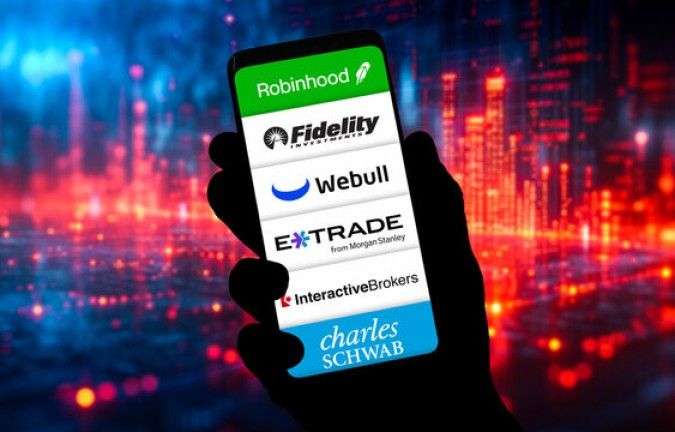
Fidelity has successfully bridged the gap between legacy reliability and modern accessibility. Their Stocks by the Slice program allows for fractional trading of most S&P 500 stocks. Fidelity stands out for its massive library of research and its refusal to lend your shares to short sellers without your explicit consent.
Robinhood: The Mobile Pioneer
Robinhood changed the world of finance with its sleek, intuitive interface. For a small investor who prefers a mobile-first approach, Robinhood is exceptionally easy to use. However, the platform is often criticized for "gamifying" investing, which can lead to impulsive trading decisions that hurt small accounts.
Charles Schwab: The All-In-One Solution
Schwab offers a "Schwab Stock Slices" feature that is highly robust. Their customer service is widely considered the best in the industry, which is a significant advantage when a new investor has technical or tax-related questions.
The Mathematics of Fractional Shares
The true power of fractional shares is the ability to achieve instant diversification. Without this feature, an investor with $500 might only be able to buy one share of a high-priced tech stock, leaving them 100% exposed to a single company's risk.
Initial Deposit: $100
Monthly Contribution: $100
Annual Return: 8% (Historical Market Average)
Time Horizon: 10 Years
After 10 Years: $18,416.57
Total Invested: $12,100.00
Total Interest: $6,316.57
Note: This assumes 100% reinvestment of dividends.
Interactive Comparison Grid
The following table summarizes the landscape for small-scale participants in the current year.
| Platform Name | Fractional Shares? | Min. Deposit | Best For... |
|---|---|---|---|
| Fidelity | Yes (7,000+ stocks) | $0 | Long-term wealth & Trust |
| Robinhood | Yes | $0 | Ease of Use & Mobile UX |
| Public.com | Yes | $0 | Social Investing & Treasuries |
| M1 Finance | Yes (Automated) | $100 | Passive Portfolio Building |
| Schwab | S&P 500 only | $0 | Customer Support & Research |
The Hidden Costs of "Free" Trading
While commissions are gone, small investors must be wary of other fees that can silently erode a small balance. One such fee is the ADR Fee (American Depositary Receipt), which applies to international stocks. Another is the Transfer Fee (ACAT), which can cost between $50 and $100 if you decide to move your stocks to a different broker. For an account with only $500, a $75 transfer fee represents a massive 15% loss.
Risk Mitigation for the Small Account
The psychological pressure of seeing a $200 account drop to $180 is often higher than seeing a $1,000,000 account drop to $900,000. Small investors must avoid options trading and margin (borrowing money to buy stocks) early in their journey. These features are designed for sophisticated participants and can wipe out a small account in a single day of market volatility.
Common Investor Inquiries
Ultimately, the best platform for a small investor is the one they will actually use consistently. The financial industry is built on complexity, but successful small-scale investing is built on simplicity. By choosing a platform that supports fractional shares and automated contributions, you leverage the power of compound interest—the greatest wealth-building force ever discovered. Your goal should not be to find the "perfect" stock, but to build a consistent habit of market participation that lasts for decades.
Last Reviewed: . Financial results depend on individual circumstances and market conditions. Always perform due diligence before committing capital.