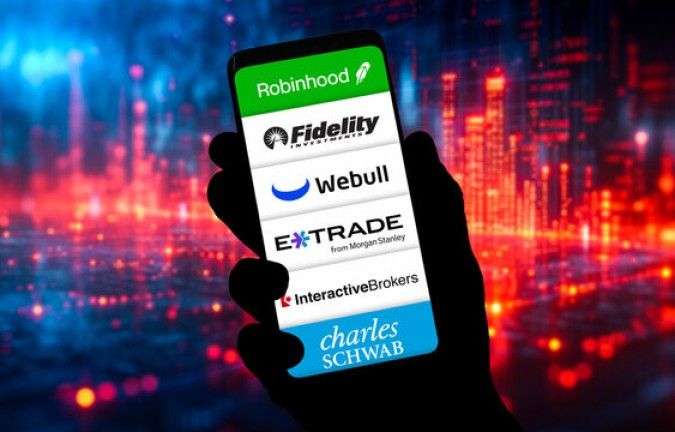
Financial mastery begins with the elimination of unnecessary risk. For the aspiring investor, the stock market represents a dual-edged sword of significant wealth generation and catastrophic capital loss. The bridge between these two outcomes is often built through mock stock trading apps, commonly known as paper trading simulators. These platforms allow individuals to engage with real-time market data using simulated currency, providing a sandbox for testing strategies without the psychological and financial burden of actual losses.
In the current financial landscape, the barrier to entry has never been lower. However, the abundance of choice presents a new challenge: identifying a platform that mirrors the realities of the professional trading environment. A superior mock trading app does more than just track price movements; it replicates order execution types, slippage, and commissions, ensuring that your successful simulation translates effectively to a live brokerage account.
The Value of Market Simulation
The primary utility of a mock trading app is the development of muscle memory. Trading is as much a technical skill as it is a psychological one. Beginners often struggle with the mechanics of a trading interface—accidentally hitting "market buy" when they intended a "limit buy," or failing to set an appropriate stop-loss. By utilizing a simulator, these mechanical errors are ironed out in a consequence-free environment.
Beyond the basics, simulation serves as the laboratory for quantitative strategy testing. Experienced investors use these platforms to backtest theories. For instance, if you believe that a specific combination of Moving Averages and Relative Strength Index (RSI) readings indicates an imminent reversal, you can execute 100 trades based on that logic in a simulator. The data gathered provides a statistical basis for whether the strategy deserves real capital allocation.
Critical Selection Criteria
Not all mock trading platforms are created equal. Some are designed for entertainment, while others are built to prepare you for the rigor of institutional-grade trading. To maximize your learning curve, prioritize apps that offer Real-Time Data Feeds. Some simulators use delayed data (usually 15 to 20 minutes behind the actual market). While this is sufficient for long-term investing practice, it is detrimental for day trading or swing trading practice, as it removes the element of "live" pressure.
Another essential feature is the inclusion of advanced order types. A high-quality simulator should offer Limit, Market, Stop-Loss, and OCO (One Cancels the Other) orders. Understanding how these orders interact with a fluctuating price is the foundation of professional risk management. Without these tools, a mock trading app is little more than a video game.
Thinkorswim (PaperMoney)
Owned by Charles Schwab, this is the gold standard for professional-grade simulation. It provides full access to advanced charting, Level II data, and complex options strategies.
Webull Paper Trading
Perfect for those who trade on the go. Webull offers a clean, modern interface with robust technical indicators and a dedicated section for simulated global competitions.
MarketWatch Virtual Stock Exchange
Designed for social and educational environments. It allows users to create private leagues to compete against friends or students, focusing on long-term portfolio growth.
Professional-Grade Simulators
For those serious about a career in trading or managing a significant personal portfolio, professional-grade simulators are the only viable option. Thinkorswim’s PaperMoney is widely regarded as the most powerful tool available to retail investors. It uses the exact same platform as the live version, meaning once you master the simulator, you have mastered the actual brokerage software. This seamless transition is invaluable.
Interactive Brokers (IBKR) also offers a comprehensive paper trading account. Known for its access to international markets, IBKR's simulator allows you to trade stocks, bonds, currencies, and futures across dozens of global exchanges. This is the ideal environment for the macro investor looking to understand how different asset classes correlate during periods of market volatility.
Educational and Gamified Apps
If the professional interfaces seem too daunting, educational simulators like Investopedia Stock Simulator provide a gentler learning curve. These platforms integrate educational articles and definitions directly into the trading experience. When you place a trade, the system might provide a link explaining what a "Price-to-Earnings Ratio" is, reinforcing the theoretical knowledge while you practice the practical application.
Gamification is another trend in the mock trading world. Apps like Best Brokers or Stock-Edge use leaderboard systems and achievement badges to keep users engaged. While these are fun and helpful for basic familiarity, users must be careful not to treat the actual stock market as a game once they transition to real money. The lack of "pain" in a gamified environment can sometimes lead to reckless risk-taking habits.
Feature Comparison Matrix
| Platform | Data Speed | Asset Classes | Mobile Experience | Skill Level |
|---|---|---|---|---|
| Thinkorswim | Real-Time | Stocks, Options, Futures, Forex | Very Deep / Complex | Advanced |
| Webull | Real-Time | Stocks, Options, ETFs | Excellent / Modern | Intermediate |
| Investopedia | 15m Delayed | Stocks, ETFs | Web-Optimized | Beginner |
| TradingView | Real-Time (Paid) | Global Stocks, Crypto, Forex | Great Charting | Intermediate/Pro |
Technical Analysis in Mock Trading
Technical analysis (TA) involves using historical price charts and mathematical indicators to predict future price movements. A mock trading app is the best place to learn TA because it allows you to draw trendlines, identify support and resistance zones, and apply oscillators like the MACD or Bollinger Bands in real-time. By watching how these indicators react as new candles form on the chart, you develop a sense of probability.
For instance, an investor might practice identifying "Double Bottom" patterns. In a simulator, you can wait for the pattern to form, set your entry point just above the neckline, and see how often the price reaches your target. After doing this 50 times, you will have a realistic expectation of the pattern's success rate, which prevents you from over-leveraging when you see the same pattern in a live account.
Transitioning to Live Capital
The most dangerous phase of an investor's journey is the transition from paper to live money. This is often where "The Wall" is hit. In simulation, a 5,000-dollar loss is just a number on a screen. In a live account, that same 5,000 dollars might represent three months of rent or a child's tuition. This psychological weight changes how decisions are made.
The Incremental Deployment Strategy
Expert traders recommend an incremental approach. After three consecutive months of profitability in a mock trading app, do not move your entire bankroll into the market. Start by trading 10% of your intended capital. This allows you to feel the "heat" of live trading while keeping the financial consequences small enough that you can still make rational, objective decisions. Only increase your position size as your psychological comfort with live risk grows.
Limitations of Paper Trading
While mock trading is essential, it has two critical limitations: Psychology and Slippage. As mentioned, the absence of real financial pain makes it easier to hold onto losing positions in a simulator, hoping they will turn around. In real trading, that hope is often replaced by panic, leading to poor exits. Furthermore, simulators often execute your trades at the current "Ask" or "Bid" price instantly.
In the real world, "slippage" occurs. If you are trying to buy 1,000 shares of a low-volume stock, your order might get filled at several different prices, often higher than the one you saw on your screen. Real-world order execution is also subject to the bid-ask spread. If a stock is quoted at 10.00 dollars (Bid) and 10.10 dollars (Ask), you are essentially down 1% the moment you buy it. Many simple simulators ignore this cost, leading to an inflated sense of profitability.
Frequently Asked Questions
Utilizing a mock stock trading app is the most logical first step for any investor. It provides a laboratory to fail safely, a classroom to learn technicals, and a gym to build the mental fortitude required for the high-stakes world of finance. By selecting a platform that offers real-time data and advanced order types, you ensure that the skills you develop are transferable to the real world. Mastery of the market is not about avoiding losses—it is about managing them through practiced, disciplined execution.