
Introduction
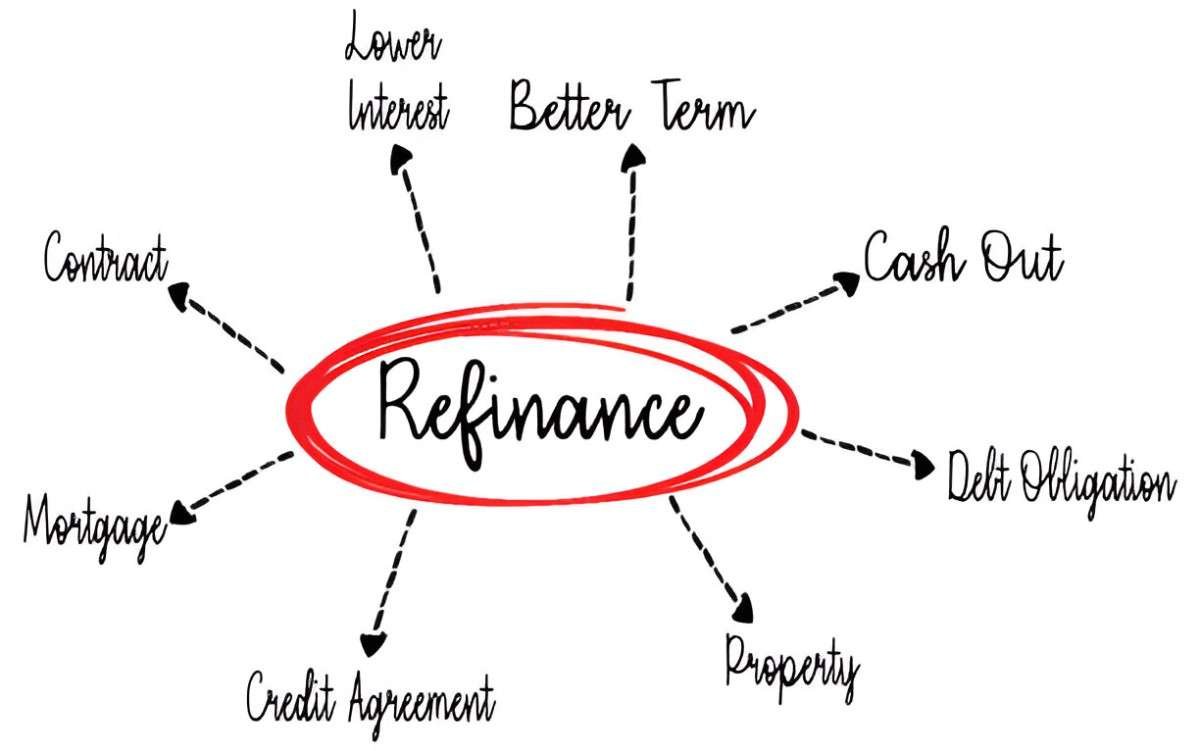
The decision to refinance a mortgage is a significant financial pivot point. It is not a one-size-fits-all solution but a powerful strategic tool with multiple applications. Homeowners often view refinancing through a narrow lens, focusing solely on securing a lower monthly payment. However, this perspective overlooks a vast landscape of financial optimization. A refinance can fundamentally alter your cash flow, accelerate your debt freedom, unlock capital for wealth-building opportunities, and manage risk. This article will explore ten distinct, strategic reasons to consider refinancing, moving beyond surface-level motivation to provide a deep, analytical framework for each scenario. We will examine the mechanics, the mathematical justification, the ideal candidate profile, and the potential pitfalls for each strategy, empowering you to make an informed decision aligned with your broader financial goals.
Table of Contents
1. Securing a Lower Interest Rate (The Rate-and-Term Refinance)
This is the most common and intuitive reason to refinance. When market interest rates fall significantly below the rate on your existing mortgage, a refinance can reduce your interest expense for the remainder of the loan’s term.
The Mechanics: You replace your current mortgage with a new loan at a lower interest rate, often for a similar term (e.g., replacing a 30-year loan with another 30-year loan). The goal is purely to improve the loan’s terms.
Mathematical Justification:
The calculation is straightforward. You must compare the monthly savings to the closing costs to determine the break-even point.
Example: Your current loan has a \text{\$300,000} balance at 6.5% with a \text{\$1,896} payment. You refinance to a 6.0% loan, lowering your payment to \text{\$1,799}. Closing costs are \text{\$6,000}.
\text{Monthly Savings} = \text{\$1,896} - \text{\$1,799} = \text{\$97}
If you plan to stay in the home for more than 5.2 years, the refinance is financially beneficial.
Ideal Candidate: A homeowner who plans to stay in their home long enough to pass the break-even point and who can secure a rate that is at least 0.5% to 0.75% lower than their current rate.
2. Shortening the Loan Term (The Accelerator Refinance)
This strategy prioritizes debt elimination over monthly payment reduction. Homeowners refinance from a longer-term loan (e.g., 30 years) to a shorter-term loan (e.g., 15 or 10 years) to build equity faster and save a substantial amount in interest.
The Mechanics: You replace your existing mortgage with a new loan that has a shorter amortization schedule. This dramatically increases the portion of each payment that goes toward the principal balance.
Mathematical Justification:
The savings are often monumental, even if the new interest rate is only slightly better.
Example: A homeowner has a \text{\$250,000} balance on a 30-year mortgage at 5.5% with 25 years remaining. They refinance to a 15-year mortgage at 5.25%.
- Remaining Interest on Old Loan: ~\text{\$208,000}
- Total Interest on New 15-Year Loan: (\text{\$2,009.38} \times 180) - \text{\$250,000} = \text{\$111,688.40}
- Interest Saved: ~\text{\$96,312}
Ideal Candidate: A borrower with significant disposable income who can comfortably afford the higher monthly payment and values the psychological benefit of becoming debt-free sooner.
3. Converting from an Adjustable-Rate to a Fixed-Rate (The Risk Management Refinance)
An Adjustable-Rate Mortgage (ARM) offers a low initial teaser rate that later adjusts based on market indices. Refinancing to a fixed-rate mortgage eliminates the uncertainty of future payment increases and provides permanent payment stability.
The Mechanics: Before the initial fixed period of your ARM ends, you lock in a fixed rate for the long term, protecting yourself from potential interest rate hikes.
Mathematical Justification:
This is a hedge against future rate volatility. The math involves comparing the projected payments of the ARM after adjustment to the guaranteed payment of a new fixed-rate loan.
Example: Your 5/1 ARM has a \text{\$400,000} balance. The initial 5-year rate of 4.0% is ending, and the rate is set to adjust to 6.5% (a common cap). Your payment would jump from \text{\$1,910} to \text{\$2,528}. Refinancing to a 6.0% 30-year fixed loan sets your payment at \text{\$2,398}, which is higher than your initial ARM payment but lower than the adjusted payment, and it will never change.
Ideal Candidate: Any homeowner with an ARM who is risk-averse, plans to stay in the home long-term, and wishes to lock in predictable housing costs, especially in a rising interest rate environment.
4. Tapping Home Equity (The Cash-Out Refinance)
This strategy allows you to convert a portion of your home’s equity into tax-free cash by taking out a new mortgage larger than your existing one.
The Mechanics: The new loan pays off the old mortgage, and you receive the difference in cash, minus closing costs. The new loan amount is based on a percentage of your home’s current value (the Loan-to-Value ratio, or LTV).
\text{Cash Out} = \text{New Loan Amount} - \text{Old Mortgage Balance} - \text{Closing Costs}Strategic Uses: The wisdom of this move depends entirely on how the cash is used.
- High-ROI Home Improvements: \text{\$50,000} kitchen remodel that increases home value by \text{\$75,000}.
- Debt Consolidation: Paying off high-interest credit card debt (18\%+ APR) with lower-interest mortgage debt (6-7\%).
- Funding Education: Investing in a degree that increases earning potential.
Ideal Candidate: A homeowner with substantial equity (ideally at least 20%), a clear and prudent plan for the capital, and the ability to qualify for and service the new, larger mortgage.
5. Eliminating Private Mortgage Insurance (PMI)
Borrowers who put down less than 20% on a conventional loan typically pay for PMI, which protects the lender in case of default. Once your Loan-to-Value ratio reaches 80%, you can request to cancel PMI. If your home’s value has appreciated significantly, a refinance can be a tool to reach that 80% LTV threshold immediately.
The Mechanics: If your original loan was \text{\$360,000} on a \text{\$400,000} home (90% LTV), you started with PMI. If the home now appraises for \text{\$500,000} and you owe \text{\$350,000}, your LTV is \frac{\text{\$350,000}}{\text{\$500,000}} = 70\%. You can refinance into a new loan for \text{\$350,000} (or slightly more to cover costs) at 70% LTV, which will not require PMI.
Mathematical Justification:
\text{Annual PMI Savings} = \text{PMI Premium} \times 12Compare this saving to the closing costs of the refinance to find your break-even point.
Ideal Candidate: A homeowner whose property value has appreciated substantially since purchase, allowing them to naturally cross the 80% LTV threshold without years of payments.
6. Consolidating Multiple Properties or Loans
Some homeowners may have a primary mortgage and a second mortgage, such as a Home Equity Line of Credit (HELOC) used for the down payment or renovations. Refinancing can consolidate these separate debts into one single, simplified payment, often at a lower overall interest rate.
The Mechanics: The new loan amount is calculated to pay off the first mortgage, the second mortgage, and any closing costs. You are left with one monthly payment to one lender.
Mathematical Justification:
Calculate the weighted average interest rate of your current debts and compare it to the new rate.
If the new refinance rate is lower than this weighted average, consolidation saves money.
Ideal Candidate: A homeowner with multiple liens on their property who desires simplification and can secure a lower blended rate.
7. Removing a Co-Signer from the Loan
Life circumstances change. A divorce, a business partnership dissolution, or simply a parent who co-signed for a child now wanting to release themselves from the obligation can be addressed through a refinance.
The Mechanics: The remaining borrower on the title applies for a new mortgage in their name only. They must qualify for the loan based solely on their own credit, income, and assets. If approved, the new loan pays off the old one, and the co-signer is released from the debt.
Ideal Candidate: A borrower whose financial situation has improved significantly since the original loan was originated (e.g., higher income, better credit score) and can now qualify independently.
8. Accessing a Government-Backed Streamline Refinance
Programs like the FHA Streamline Refinance or the VA Interest Rate Reduction Refinance Loan (IRRRL) are designed for borrowers with existing FHA or VA loans. They offer a simplified refinancing process with reduced paperwork, no appraisal, and often no credit qualifying. Their purpose is to lower the interest rate with minimal friction.
The Mechanics: The process is “streamlined” because it bypasses much of the standard underwriting. The lender verifies your payment history on the existing FHA/VA loan and offers a new, lower rate.
Ideal Candidate: A homeowner with an existing FHA or VA loan who can secure a lower rate and for whom the streamlined, lower-cost process makes financial sense.
9. Changing Loan Structures for Investment Properties
Real estate investors often use different strategies for acquiring versus holding properties. An investor might use a short-term loan (like a hard money loan) to acquire and renovate a property quickly, then refinance into a long-term, lower-rate conventional mortgage once the property is stabilized and has a higher appraised value. This is known as the “BRRRR” method (Buy, Rehab, Rent, Refinance, Repeat).
The Mechanics: The investor refinances the short-term, high-interest loan into a traditional 30-year investment property mortgage, often pulling out their initial capital to reinvest.
Ideal Candidate: A real estate investor looking to recycle their capital and scale their portfolio.
10. Managing Financial Hardship (A Note of Caution)
In some cases, a government program like HARP (now expired) or a lender-specific modification might allow a struggling homeowner to refinance to a lower payment to avoid foreclosure. However, this is highly situational and often not a true refinance in the traditional sense. It typically requires proof of hardship and is a last resort. Homeowners in this situation should contact a HUD-approved housing counselor before pursuing any option.
Conclusion: Refinancing as a Strategic Lever
Refinancing is far more than a quest for a lower rate. It is a multifaceted financial lever that can be pulled to achieve specific goals: stabilizing payments, accelerating wealth building, unlocking capital, or simplifying your financial structure. The common thread among all these reasons is the necessity for rigorous analysis. You must run the numbers, understand the break-even point, factor in closing costs, and align the strategy with your long-term financial plan. With careful consideration, a refinance can be one of the most powerful moves you make to optimize your financial health and build a more secure future.


