
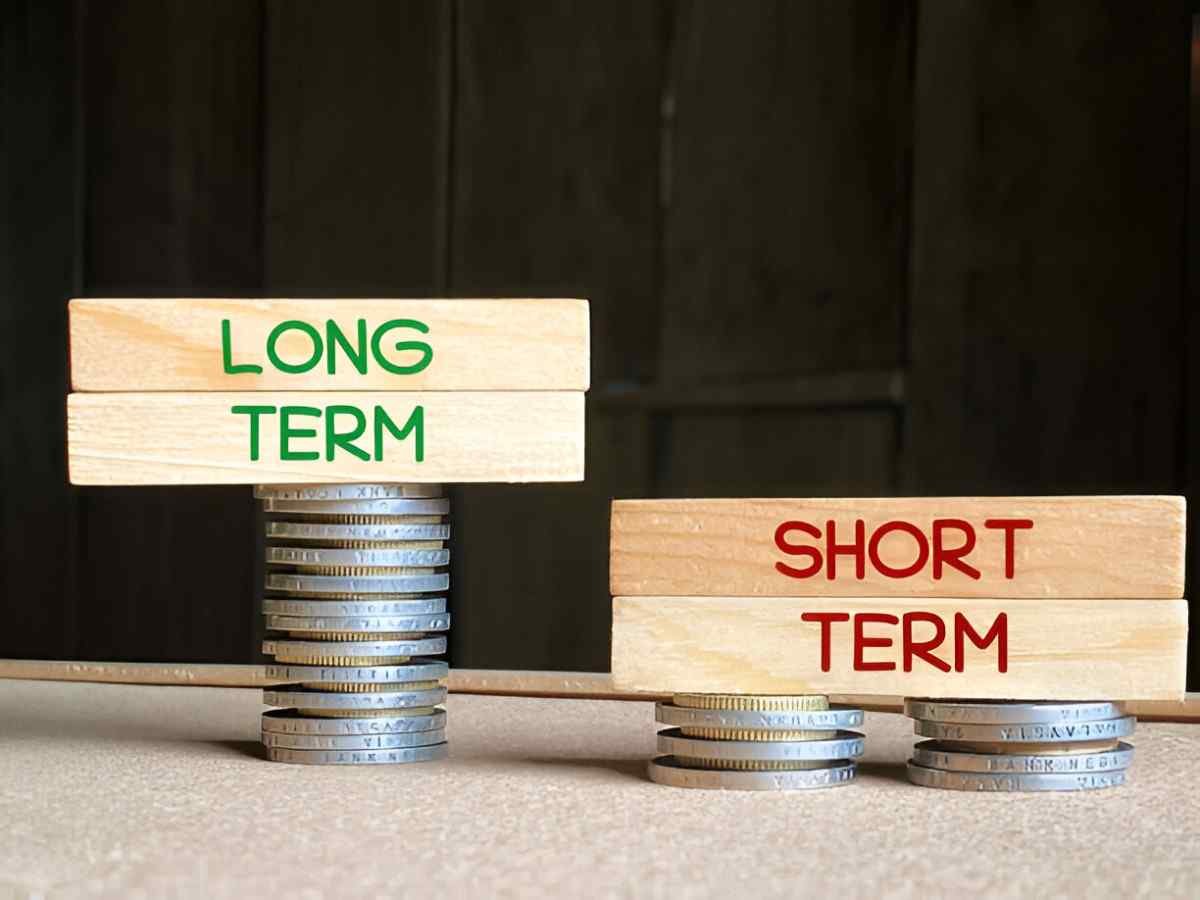
I’ve spent years analyzing how mutual funds interact with the U.S. tax system, and one question comes up more than most: Are there short-term capital gains on mutual funds? The short answer is yes—but the full picture is more nuanced than many investors realize. In this article, I’ll walk you through how short-term capital gains apply to mutual funds, when they occur, how they’re taxed, and what you can do to manage them effectively.
Table of Contents
What Are Short-Term Capital Gains?
A short-term capital gain occurs when you sell an investment you’ve held for one year or less. The IRS defines the holding period as starting the day after you acquire the asset and ending on the day you sell it. For example, if I buy shares on January 2, 2024, and sell them on January 2, 2025, I’ve held them for exactly one year. That sale would trigger a long-term capital gain. But if I sell on January 1, 2025, it’s a short-term gain.
The tax treatment is different. Short-term gains are taxed at your ordinary income tax rate, which can range from 10% to 37% depending on your income. Long-term gains, on the other hand, are taxed at lower rates—0%, 15%, or 20%—based on your taxable income.
For mutual fund investors, the key point is this: you can owe short-term capital gains taxes even if you never sell your shares.
How Mutual Funds Generate Capital Gains
Mutual funds are actively managed portfolios. Fund managers buy and sell stocks, bonds, and other securities within the fund. When they sell an investment at a profit and have held it for one year or less, that profit is a short-term capital gain for the fund.
These gains are not kept by the fund company. Instead, they are distributed to shareholders in the form of capital gains distributions. These distributions are taxable to you in the year you receive them—even if you reinvest them automatically.
Let me illustrate with a simple example.
Suppose I own shares in the Alpha Growth Fund. The fund manager sells a stock it bought eight months ago for a $10 profit per share. Since the holding period is less than one year, this is a short-term capital gain. The fund aggregates all such gains and losses across its portfolio, then distributes the net short-term gains to all shareholders at the end of the year.
Even if I’ve held my mutual fund shares for five years and have no intention of selling, I still receive a taxable distribution. That’s how short-term capital gains can affect long-term investors.
The Mechanics of Capital Gains Distributions
Mutual funds must distribute nearly all of their net investment income and net capital gains to shareholders annually. This requirement comes from Subchapter M of the Internal Revenue Code, which allows mutual funds to avoid corporate-level taxation as long as they pass income through to investors.
Here’s how the process works:
- The fund calculates its net realized gains from selling securities.
- Gains are separated into short-term (held ≤1 year) and long-term (held >1 year).
- Net gains are distributed to shareholders, usually in December.
- Shareholders report these distributions on their tax returns.
Let’s put some numbers to this.
| Fund Name | Total Capital Gains Distribution (per share) | Short-Term Portion | Long-Term Portion | Record Date |
|---|---|---|---|---|
| Alpha Growth Fund | $2.50 | $1.80 | $0.70 | Dec 10, 2024 |
| Beta Income Fund | $1.20 | $0.40 | $0.80 | Dec 12, 2024 |
| Gamma Index Fund | $0.30 | $0.10 | $0.20 | Dec 15, 2024 |
If I own 1,000 shares of the Alpha Growth Fund, I’ll receive a $2,500 capital gains distribution. Of that, $1,800 is short-term and taxed at my ordinary income rate. The remaining $700 is long-term and taxed at the preferential rate.
Suppose my marginal tax rate is 24%. My tax liability would be:
\text{Tax} = (1800 \times 0.24) + (700 \times 0.15) = 432 + 105 = 537So I owe $537 in taxes on a distribution I didn’t ask for and didn’t spend.
Why Holding Period Matters—For You and the Fund
It’s critical to distinguish between your holding period in the mutual fund and the fund’s holding period in its underlying assets.
- Your holding period determines how your sales of fund shares are taxed.
- The fund’s holding period determines how its distributions are classified.
For example, if I’ve held a mutual fund for three years and sell my shares, my gain is long-term. But if the fund distributed short-term gains during those three years, I paid ordinary income tax on those distributions when they occurred.
This dual-layer taxation confuses many investors. They see a long-term gain on their sale and assume all related taxes were favorable. But the reality is more complex.
Real-World Example: A $50,000 Investment
Let me walk through a realistic scenario.
I invest $50,000 in the MidCap Opportunities Fund on January 1, 2022. The fund has a turnover rate of 80%, meaning it replaces 80% of its portfolio each year. High turnover increases the likelihood of short-term gains.
Here’s what happens over three years:
| Year | Fund’s Short-Term Gain Distribution (per share) | My Share Count | My Short-Term Gain Received | Tax Rate | Tax Owed |
|---|---|---|---|---|---|
| 2022 | $0.90 | 1,000 | $900 | 22% | $198 |
| 2023 | $1.10 | 1,000 | $1,100 | 22% | $242 |
| 2024 | $0.85 | 1,000 | $850 | 24% | $204 |
Total short-term capital gains distributions: $2,850
Total taxes paid on distributions: $644
On January 1, 2025, I sell all shares for $65,000. My cost basis is $50,000, but I must adjust it for reinvested distributions.
Assume all distributions were reinvested. I received $2,850 in short-term gains and, say, $1,500 in long-term gains and $3,000 in dividends over the same period. My total reinvested amount is $7,350.
My adjusted cost basis becomes:
50000 + 7350 = 57350My capital gain on sale:
65000 - 57350 = 7650Since I held the fund for three years, this $7,650 is a long-term capital gain. At a 15% tax rate, I owe $1,147.50.
Total taxes over the investment period: $644 (distributions) + $1,147.50 (sale) = $1,791.50
Without understanding the distribution side, I might have underestimated my tax burden by over a third.
Mutual Fund Turnover Ratio: A Hidden Tax Signal
One of the best predictors of short-term capital gains distributions is the fund’s turnover ratio. This measures how frequently the fund buys and sells securities.
A turnover ratio of 100% means the fund replaces its entire portfolio in one year. Securities held for less than a year generate short-term gains when sold.
Let’s compare two funds:
| Fund | Turnover Ratio | Expense Ratio | Typical Short-Term Gains Distribution | Tax Efficiency |
|---|---|---|---|---|
| Vanguard 500 Index Fund | 5% | 0.03% | Low | High |
| Fidelity Contrafund | 80% | 0.82% | Moderate to High | Medium |
| Small-Cap Active Growth Fund | 120% | 1.20% | High | Low |
Index funds like the Vanguard 500 tend to be tax-efficient because they buy and hold. Active funds trade more, creating more short-term gains.
If I’m in a high tax bracket, I might prefer low-turnover funds to minimize unexpected tax bills.
Tax-Efficient Fund Placement: Where to Hold What
Not all accounts are taxed the same. This gives me a tool to manage short-term capital gains exposure.
- Taxable brokerage accounts: Distributions are fully taxable.
- Tax-deferred accounts (IRA, 401(k)): No current tax on distributions.
- Tax-free accounts (Roth IRA): No tax on distributions or withdrawals.
My strategy is simple: hold tax-inefficient funds—those with high turnover and frequent short-term gains—in tax-advantaged accounts.
For example, I might hold a high-turnover international equity fund in my IRA, where its distributions won’t trigger a tax bill. Meanwhile, I keep a low-turnover S&P 500 index fund in my taxable account.
This approach can save hundreds or thousands in taxes over time.
Are Short-Term Gains Avoidable?
I can’t eliminate short-term capital gains entirely if I own actively managed mutual funds. But I can reduce their impact.
Here are four strategies I use:
- Choose low-turnover funds
Index funds and ETFs typically have lower turnover. ETFs also benefit from a more tax-efficient structure due to in-kind redemptions. - Check distribution history
Before buying a fund, I review its past capital gains distributions. Morningstar and the fund’s website provide this data. A history of large short-term payouts is a red flag. - Time your purchases
Mutual funds usually make capital gains distributions in December. If I buy shares just before that date, I get the distribution—and the tax bill—but didn’t benefit from the fund’s long-term growth. This is known as buying “into a dividend.” I avoid it by waiting until after the record date. For example, if a fund declares a $2 distribution with a record date of December 15, the share price will drop by about $2 on December 16. If I buy on December 14, I pay full price, get $2 in taxable income, and immediately lose $2 in value. That’s a losing proposition. - Consider tax-managed funds
Some funds, like the Fidelity Tax-Managed Fund, are designed to minimize taxable distributions. They use strategies like loss harvesting and holding securities longer than one year.
The Math of Tax Drag
Let’s quantify how short-term gains can erode returns.
Suppose two funds have identical pre-tax annual returns of 8% over 10 years. But Fund A is tax-inefficient, generating 2% in short-term gains each year. Fund B is tax-efficient, with only 0.5% in short-term gains.
I invest $10,000. My tax rate is 24%.
For Fund A, annual tax on short-term gains:
0.02 \times 10000 \times 0.24 = 48This $48 is paid each year, reducing reinvestment.
For Fund B:
0.005 \times 10000 \times 0.24 = 12After 10 years, the difference in after-tax value is significant.
Using the future value formula:
FV = PV \times (1 + r - t)^nWhere:
- PV = 10000
- r = 0.08 (return)
t = tax drag from distributions- n = 10
For Fund A, tax drag = 0.02 \times 0.24 = 0.0048
Effective return = 0.08 - 0.0048 = 0.0752
For Fund B, tax drag = 0.005 \times 0.24 = 0.0012
Effective return = 0.08 - 0.0012 = 0.0788
Difference: $890
That’s nearly 9% more wealth with the tax-efficient fund—without any difference in pre-tax performance.
Common Misconceptions
Let me clear up a few myths I hear often.
Myth 1: “I didn’t sell, so I don’t owe taxes.”
False. Capital gains distributions are taxable regardless of whether you sell.
Myth 2: “All mutual fund gains are long-term.”
No. The fund’s internal trading determines the character of distributions.
Myth 3: “Index funds never have short-term gains.”
Most don’t, but they can. Index rebalancing, corporate actions, or cash flows can force sales within one year.
Myth 4: “ETFs don’t have capital gains distributions.”
While rare, ETFs can distribute gains. It happened to some bond ETFs in 2022 during rising rate environments.
What the IRS Requires You to Track
I must report capital gains distributions on Form 1099-DIV, which mutual fund companies send each January.
Box 1a shows ordinary dividends.
Box 2a shows capital gains distributions.
Box 12 may show state tax information.
I report short-term gains on Schedule D of my Form 1040 if I sold shares. But even if I didn’t sell, I still report the distribution as ordinary income.
My cost basis must include all reinvested distributions. If I don’t, I’ll overpay taxes when I eventually sell.
Most brokerages now provide cost basis tracking, but I verify it annually.
A Final Word: Balance Tax and Investment Goals
I don’t avoid short-term capital gains at all costs. Sometimes, an actively managed fund with higher turnover delivers better risk-adjusted returns. The tax cost is part of the trade-off.
But I make that choice consciously. I compare after-tax returns, not just pre-tax numbers.
For most investors, especially those in higher tax brackets, minimizing unnecessary tax drag is a smart move. It won’t make me rich overnight, but it will preserve more of what I earn.
And in investing, keeping more of what you make is just as important as making more.
Summary Table: Key Takeaways
| Factor | Impact on Short-Term Capital Gains | What I Do |
|---|---|---|
| Fund Turnover >50% | Higher likelihood | Prefer low-turnover funds |
| Active Management | More trading, more gains | Use in tax-advantaged accounts |
| Index Funds | Lower turnover, fewer gains | Hold in taxable accounts |
| Year-End Purchases | Risk of buying into a distribution | Check record dates |
| Reinvested Distributions | Increase cost basis | Track to avoid double taxation |
| Tax Bracket >24% | Higher tax on short-term gains | Prioritize tax efficiency |
In the end, short-term capital gains on mutual funds are real, unavoidable in many cases, and often misunderstood. But with the right knowledge and tools, I can manage them effectively. The goal isn’t to eliminate taxes—that’s impossible—but to pay only what’s necessary and keep the rest working for me.


