
Introduction
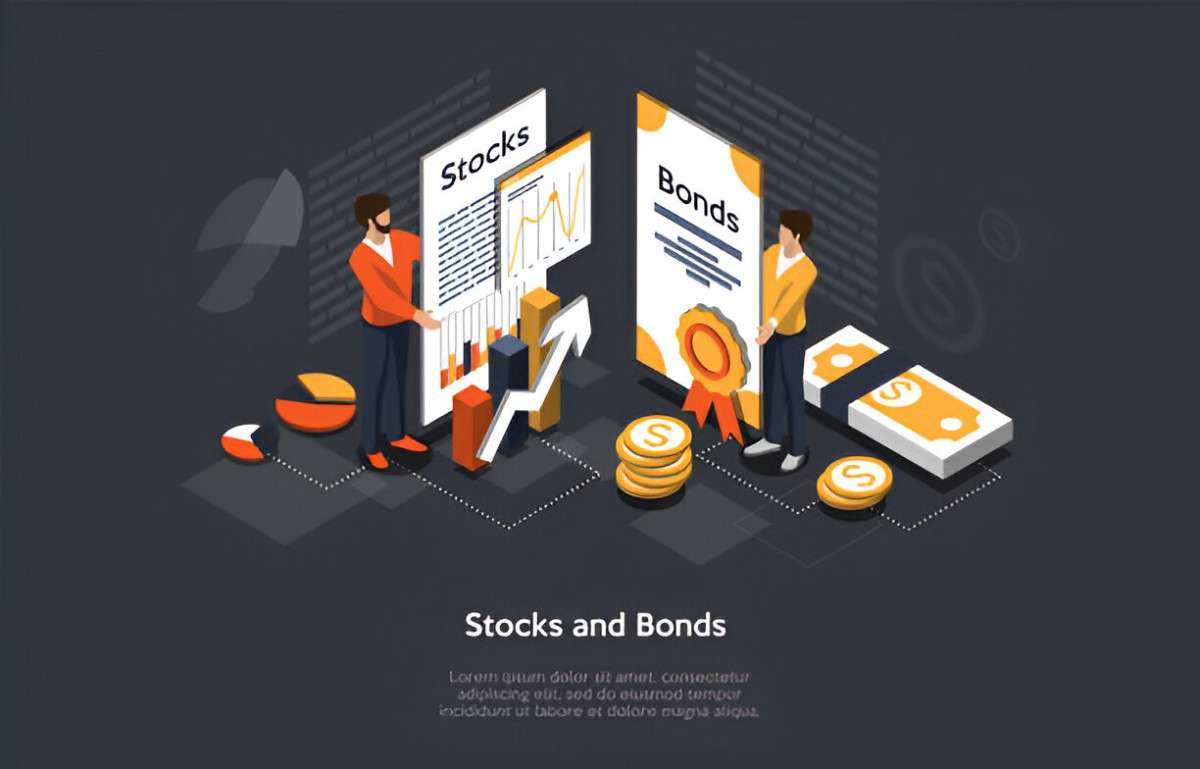
As a finance expert, I often get asked whether stocks, bonds, and mutual funds qualify as securities. The short answer is yes, but the long answer involves legal definitions, market mechanics, and regulatory frameworks. In this article, I will break down what makes these financial instruments securities, how they differ, and why they fall under this classification.
Table of Contents
What Is a Security?
The term security has a precise legal definition under U.S. law. According to the Securities Act of 1933 and the Securities Exchange Act of 1934, a security is a financial instrument that represents an ownership position, a creditor relationship, or rights to ownership. The definition includes:
- Stocks (equities)
- Bonds (debt securities)
- Mutual funds (investment companies)
- Options, futures, and other derivatives (under certain conditions)
The Howey Test, established by the Supreme Court in SEC v. W.J. Howey Co. (1946), further clarifies whether an instrument qualifies as a security. The test states that a transaction is a security if:
- It involves an investment of money.
- There is an expectation of profits.
- The investment is in a common enterprise.
- Profits are derived from the efforts of a promoter or third party.
Stocks, bonds, and mutual funds meet all these criteria.
Stocks as Securities
Definition and Characteristics
A stock represents fractional ownership in a corporation. When I buy a stock, I become a shareholder, which means I have a claim on the company’s assets and earnings.
Why Stocks Are Securities
- Investment of money: I pay to acquire shares.
- Expectation of profits: I expect capital gains or dividends.
- Common enterprise: The company’s performance affects all shareholders.
- Third-party efforts: Management drives profitability.
Example: Calculating Stock Returns
Suppose I buy 100 shares of Company X at $50 per share. After a year, the stock rises to $60, and the company pays a $2 dividend per share.
My total return is calculated as:
Capital Gain = (60 – 50) × 100 = $1,000
Dividends = 2 × 100 = $200
Total Return = 1,000 + 200 = $1,200
Bonds as Securities
Definition and Characteristics
A bond is a debt instrument where I lend money to an entity (government or corporate) in exchange for periodic interest payments and the return of principal at maturity.
Why Bonds Are Securities
- Investment of money: I purchase the bond.
- Expectation of profits: I receive interest (coupon payments).
- Common enterprise: The issuer’s creditworthiness affects all bondholders.
- Third-party efforts: The issuer’s ability to repay depends on management or economic policies.
Example: Bond Yield Calculation
If I buy a \$1,000 bond with a 5% annual coupon and a 10-year maturity, my yearly interest is:
\text{Annual Interest} = 1,000 \times 0.05 = \$50If the bond’s price changes to \$900, the current yield becomes:
\text{Current Yield} = \frac{50}{900} \approx 5.56\%Mutual Funds as Securities
Definition and Characteristics
A mutual fund pools money from multiple investors to buy a diversified portfolio of stocks, bonds, or other assets. Investors receive shares proportional to their investment.
Why Mutual Funds Are Securities
- Investment of money: I buy fund shares.
- Expectation of profits: I benefit from portfolio growth or dividends.
- Common enterprise: All investors share in the fund’s performance.
- Third-party efforts: Fund managers make investment decisions.
Example: Net Asset Value (NAV) Calculation
If a mutual fund has:
- Total assets: \$10,000,000
- Liabilities: \$500,000
- Outstanding shares: 1,000,000
The NAV per share is:
\text{NAV} = \frac{10,000,000 - 500,000}{1,000,000} = \$9.50Comparison Table: Stocks, Bonds, and Mutual Funds
| Feature | Stocks | Bonds | Mutual Funds |
|---|---|---|---|
| Type | Equity | Debt | Pooled Investment |
| Returns | Dividends/Capital Gains | Fixed Interest | Portfolio Growth |
| Risk | High | Moderate | Varies |
| Liquidity | High (Stock Exchange) | Moderate (Secondary Market) | High (Daily Redemption) |
| Regulation | SEC | SEC/FINRA | SEC/Investment Company Act |
Legal and Regulatory Framework
The Securities and Exchange Commission (SEC) oversees securities markets in the U.S. Key regulations include:
- Securities Act of 1933: Requires disclosure for public offerings.
- Securities Exchange Act of 1934: Governs secondary markets.
- Investment Company Act of 1940: Regulates mutual funds.
Are All Investments Securities?
Not all financial instruments are securities. For example:
- Real estate: Not a security unless structured as a REIT.
- Commodities (gold, oil): Only futures contracts are securities.
- Cryptocurrencies: Some (like Bitcoin) are not securities, but tokenized assets may be.
Conclusion
Stocks, bonds, and mutual funds are unequivocally securities under U.S. law. They meet the Howey Test criteria and are regulated by the SEC. Understanding this classification helps investors navigate risks, compliance, and market behavior. Whether I invest in Apple stock, a Treasury bond, or an S&P 500 index fund, I am dealing with securities—each with distinct risk-return profiles but unified under the same regulatory umbrella.


